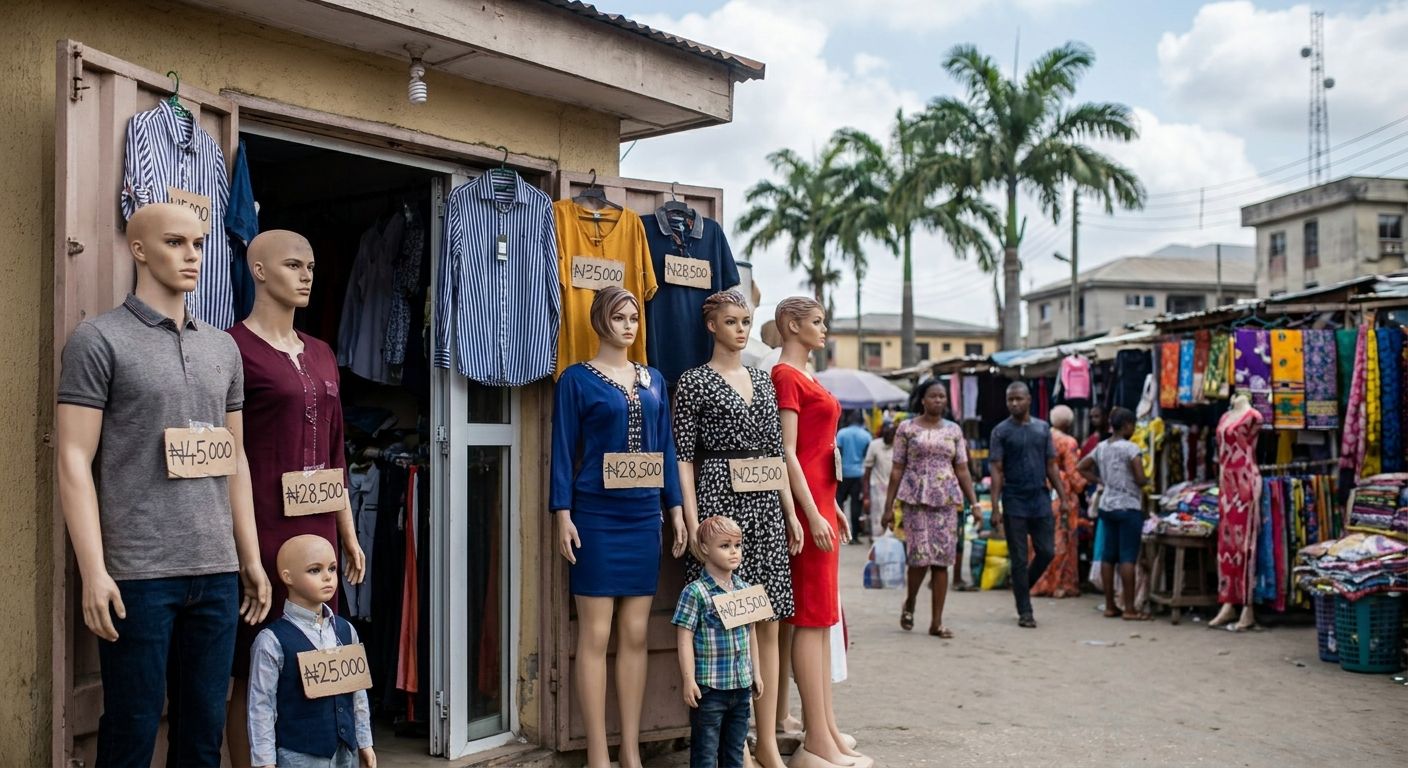
Mannequin prices in Nigeria in 2026 depend far more on material and finish than on any fixed national rate — a plastic display form costs a fraction of a realistic fiberglass mannequin with a painted face and wig. The bigger cost most buyers miss isn't the mannequin itself but freight, customs clearance, and any custom paint or branding work added after purchase.
- Mannequin price in Nigeria splits into three tiers: budget plastic, mid-range fiberglass, and premium realistic display forms.
- Material and finish drive cost more than size — a painted, wigged fiberglass mannequin sits well above a plain plastic one.
- Import duties and delivery outside Lagos or Abuja add to the final cost buyers rarely budget for.
- Whogohb stocks mannequins, hangers, racks and sewing equipment for boutiques and fashion houses across Nigeria.
Why this matters
Boutique owners and tailoring businesses in Nigeria often price a mannequin the way they'd price a stool — as one fixed number. It doesn't work that way. A headless torso form for a small tailoring shop and a full-body realistic mannequin for a flagship retail window sit in completely different cost brackets, and mixing them up leads to budget shocks mid-order.
Knowing which tier you actually need before you shop saves you from overpaying for features you won't use, or underbuying a display piece that looks cheap under shop lighting.
How much do mannequins cost in Nigeria in 2026?
The honest answer is: it depends on which of three tiers you're buying into. Nigerian fashion houses, tailoring shops, and retail boutiques typically shop across budget, mid-range, and premium mannequin categories, and the gap between the bottom and top of that range is wide.
| Type | Material | Typical price tier | Best for |
|---|---|---|---|
| Basic plastic mannequin | Molded plastic, plain finish | Budget | Small tailoring shops, back-room fitting |
| Fabric-covered dress form | Linen or jersey over foam | Budget to mid-range | Sewing and pattern-fitting work |
| Headless/torso mannequin | Fiberglass or plastic | Mid-range | Boutiques with limited floor space |
| Full-body fiberglass mannequin | Fiberglass, painted finish | Mid-range to premium | Retail window displays |
| Realistic mannequin with wig and makeup | Fiberglass, hand-finished | Premium | Flagship stores, high-end fashion houses |
The fixture catalog at Whogohb covers mannequins alongside hangers, racks and sewing equipment, which matters if you're outfitting a shop from scratch rather than buying one item at a time.
Full-body mannequins: the premium end of the range
Full-body mannequins carry the highest price tag in the category because they need more material, a full paint job, and often a stand or base built to hold the weight. Retailers running window displays should budget for this tier rather than trying to save with a torso form — a headless mannequin simply can't showcase a full outfit the way a shopper expects. For a customer-facing display option, see the Rebecca BBL full fibreglass female mannequin.
Headless and torso mannequins: the mid-range workhorse
Headless and torso forms sit in the middle of the market because they use less material and skip the facial finishing that drives up premium pricing. They work well for boutiques short on floor space or shops that rotate stock fast and don't need a face attached to every outfit. Boutiques comparing a smaller display with a full-body option can review the Rebecca BBL full fibreglass female mannequin.
Dress forms and fabric-covered mannequins: the budget entry point
Fabric-covered dress forms are the cheapest way into the category because the base is usually foam or a simple frame, not molded fiberglass. Tailors and sewing workshops use these for fitting and pattern work rather than customer-facing display, which is exactly where the lower cost tier makes sense.
Why mannequin prices vary in Nigeria
- Material — plastic costs less than fiberglass, and fiberglass costs less than hand-finished realistic mannequins with painted skin tones.
- Finish and detail — a plain matte body costs less than one with a molded face, wig, and makeup applied.
- Import route and logistics — mannequins shipped in from overseas carry freight and customs costs that local assembly or sourcing can avoid.
- Location of delivery — buyers outside Lagos, Abuja, or Port Harcourt often pay more once transport to the final shop is added in.
- Customization — branding, custom paint colors, or made-to-measure sizing pushes any tier higher than its standard version.
- Quantity ordered — outfitting a full flagship store with a dozen mannequins is priced differently than a single fitting-room form for a small tailor.
“A plain torso form and a realistic wigged mannequin are not the same purchase decision — pricing them the same way is how boutique budgets go wrong.”
Is it cheaper to buy mannequins locally or import them into Nigeria?
Local sourcing usually avoids the freight and customs costs that come with importing, which is the main reason it tends to work out cheaper for most Nigerian boutiques and tailoring businesses in 2026. Importing can still make sense for highly specific finishes or sizes not readily stocked locally, but that convenience carries the logistics cost with it.
How do I choose the right mannequin tier for my shop?
Match the mannequin to where it's used: a fitting-room or back-office mannequin only needs to hold a garment's shape, so a budget or fabric-covered form works fine. A window display facing walk-in customers earns its keep with a mid-range or premium finish, because that's the piece shoppers judge the storefront by. The Rebecca BBL full fibreglass female mannequin fits the full-body retail-display use case.
Do fiberglass mannequins cost more than plastic ones?
Fiberglass mannequins generally sit above plastic ones on price because the material is more durable, holds paint and finish work better, and is standard for retail-grade display forms. Plastic remains the lower-cost option for shops that need functional fitting forms rather than showroom-quality display pieces.
Browse fixtures for your fashion house
Mannequins, hangers, racks and sewing equipment in one catalog.
FAQ
What is the mannequin price in Nigeria in 2026?
Mannequin price in Nigeria in 2026 depends on the tier: budget plastic and fabric-covered forms cost the least, mid-range fiberglass torsos sit in the middle, and premium realistic full-body mannequins with paint and wigs cost the most. There's no single fixed price across the market because material and finish vary so widely.
What's the cheapest type of mannequin to buy in Nigeria?
Fabric-covered dress forms and basic plastic mannequins are the cheapest options because they use simpler materials and skip detailed finishing. They suit tailoring and fitting work rather than customer-facing retail display.
Are headless mannequins cheaper than full-body ones?
Headless and torso mannequins generally cost less than full-body versions because they use less material and require no facial finishing. They're a common mid-range choice for boutiques with limited floor space.
Why do some mannequins in Nigeria cost so much more than others?
The cost gap comes down to material, finish, and customization — a plain plastic form and a hand-painted fiberglass mannequin with a wig are built with entirely different processes and materials. Import logistics and delivery location add further variation.
Is it better to buy a mannequin locally or import one into Nigeria?
Buying locally usually works out cheaper because it avoids freight and customs costs tied to importing. Importing only makes sense when a shop needs a specific finish or size that isn't available from local suppliers.
Do I need a premium mannequin for a small tailoring shop?
No — a small tailoring shop generally only needs a budget or fabric-covered dress form for fitting and pattern work. Premium finishes matter most for customer-facing retail displays, not back-room tailoring.
What affects mannequin pricing the most in Nigeria?
Material and finish affect pricing the most, followed by import logistics and any customization like branding or custom paint. Quantity ordered also shifts pricing when outfitting a full store versus buying a single piece.
One last thing
Most boutique owners in Nigeria underbudget for the finishing work, not the mannequin itself — a plain fiberglass form painted, wigged, and dressed to match a flagship window can end up costing noticeably more than the base unit price once that work is added. Price the finish before you price the mannequin, not after.