Plastic clothes hangers make or break a retail rail in Nigeria's climate: cheap stock cracks at the shoulder within weeks, mismatched widths crowd garments together, and slick finishes let silk and satin slide onto the floor. This guide ranks the plastic hanger types that actually hold up in a busy boutique or fashion house in 2026, and tells you which one fits which section of your store.
- Standard tubular plastic clothes hangers win for everyday retail apparel across most Nigerian boutiques in 2026.
- Heavy-duty plastic hangers carry coats and outerwear without the shoulder sagging that ruins presentation.
- Slimline plastic hangers save the most rail space in tight boutique layouts.
- Kids-size plastic hangers at 25-30cm keep children's sections from swallowing small garments.
- Non-slip plastic hangers cost more but stop silk and satin from sliding off the rail.
Why this matters
A hanger is not a background prop. It sets how a garment falls, how fast a shop assistant can restock, and whether a customer sees a neat rail or a sagging one.
Nigerian fashion houses buying stock in bulk for 2026 need plastic clothes hangers that survive daily handling, humidity, and repeated loading without turning brittle. Whogohb stocks the full range covered here, from entry-level tubular hangers to heavy-duty and non-slip finishes, so this ranking works whether you're outfitting one boutique rail or a full retail floor.
The verdict
Best overall: standard tubular plastic hangers. Best for coats and outerwear: heavy-duty plastic hangers. Best for space-saving boutique racks: slimline plastic hangers. Best for children's sections: kids-size plastic hangers. Each one solves a different rail problem, not the same problem better.
What makes the best plastic clothes hangers for retail
- Load-bearing strength — the hanger holds the garment's weight without the arms bowing or the neck cracking.
- Shoulder shape — a rounded or notched shoulder keeps knitwear and tops from stretching out of shape.
- Standard width — adult hangers run 40-45cm (16-18 inches); anything narrower crowds shoulders and distorts fit.
- Grip surface — smooth plastic lets silk, satin, and slippery synthetics slide off; a textured or rubberized edge stops that.
- Rail density — thinner profiles let you fit more stock per linear foot without garments touching.
- Consistency across the floor — matching hangers by section make a rail look curated instead of thrown together.
Stock your rails for 2026
Browse the full plastic and hanger catalog for boutiques and fashion houses.
Plastic clothes hangers at a glance
| Type | Best for | Standout feature | Key limitation |
|---|---|---|---|
| Standard tubular | Everyday retail apparel | Balanced strength and low bulk | Not built for heavy coats |
| Notched shoulder | Strappy tops and camisoles | Shoulder cutouts hold thin straps | Adds no value for structured garments |
| Heavy-duty | Coats and outerwear | Reinforced neck resists snapping | Bulkier, takes more rail space |
| Slimline | Space-saving boutique racks | Thin profile fits more per foot | Lower weight tolerance |
| Kids-size | Children's clothing sections | 25-30cm width matches small garments | Useless outside the kids section |
| Non-slip (rubber-coated) | Silky and slippery fabrics | Textured grip stops slide-off | Costs more per unit than plain plastic |
1. Standard tubular plastic hangers: best plastic clothes hangers for everyday retail apparel
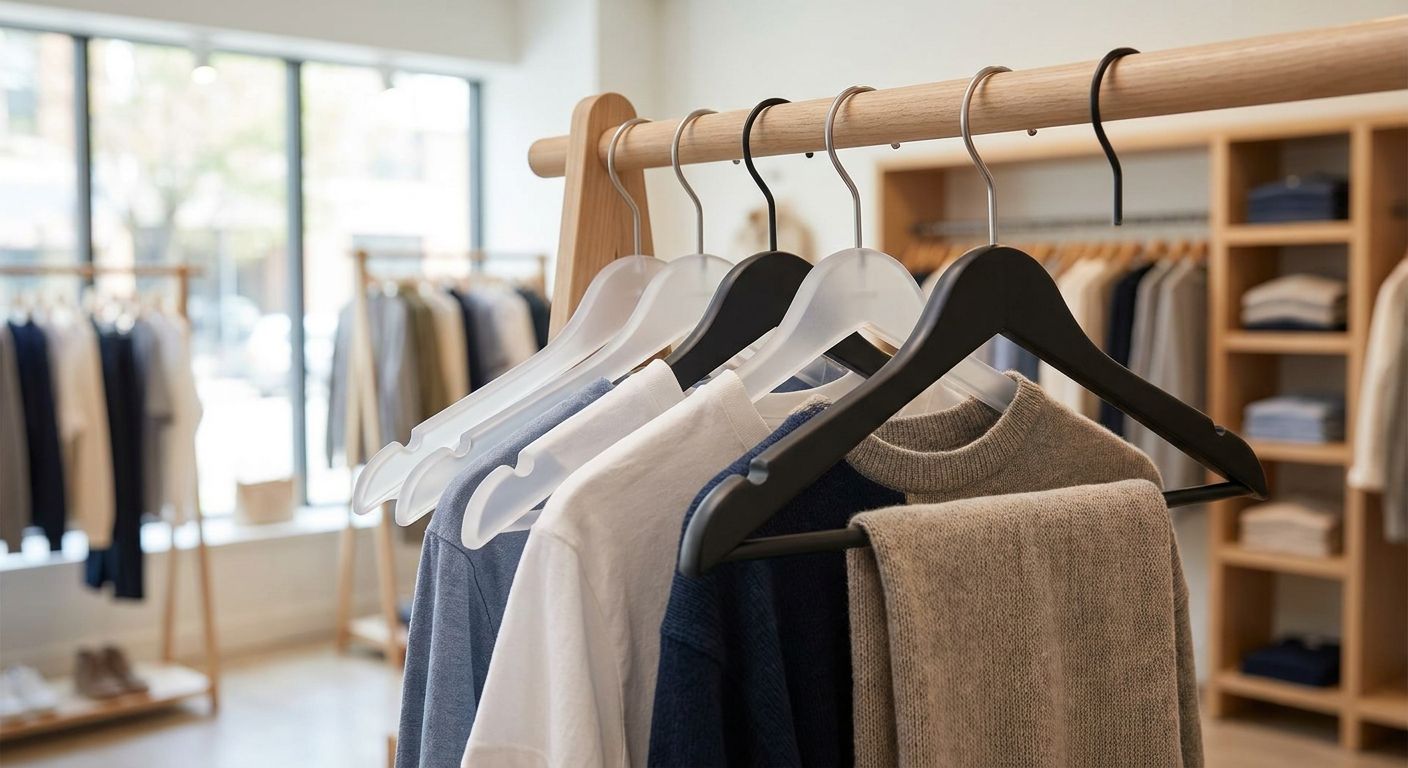
This is the hanger you reach for on 80% of a mixed-apparel rail. The rounded tubular arm supports shirts, blouses, and light dresses without pinching fabric, and the standard 40-45cm width matches most adult sizing.
Standard tubular hangers pros:
- Handles the widest range of garment types
- Lightweight, so a fully stocked rail stays manageable
- Cheapest option to buy in bulk for a full store fit-out
Standard tubular hangers cons:
- Bows under heavier fabrics like denim jackets
- No shoulder grip, so straps and thin knits can slip off
Best for: the bulk of a boutique's everyday apparel rail. Verdict: Buy.
2. Notched shoulder plastic hangers: best for strappy tops and camisoles
The notched shoulder design cuts small grooves into the arm so thin straps sit in place instead of sliding to the center. It's a narrow fix for a narrow problem: camisoles, halter tops, and slip dresses.
Notched shoulder hangers pros:
- Stops strap slippage that plain tubular hangers can't prevent
- Doubles as a standard hanger when the notch isn't needed
Notched shoulder hangers cons:
- Adds nothing for shirts, trousers, or structured garments
- Not worth stocking as your only hanger type
Best for: strappy tops, camisoles, and slip dresses. Verdict: Buy as a supplement, not a full replacement.
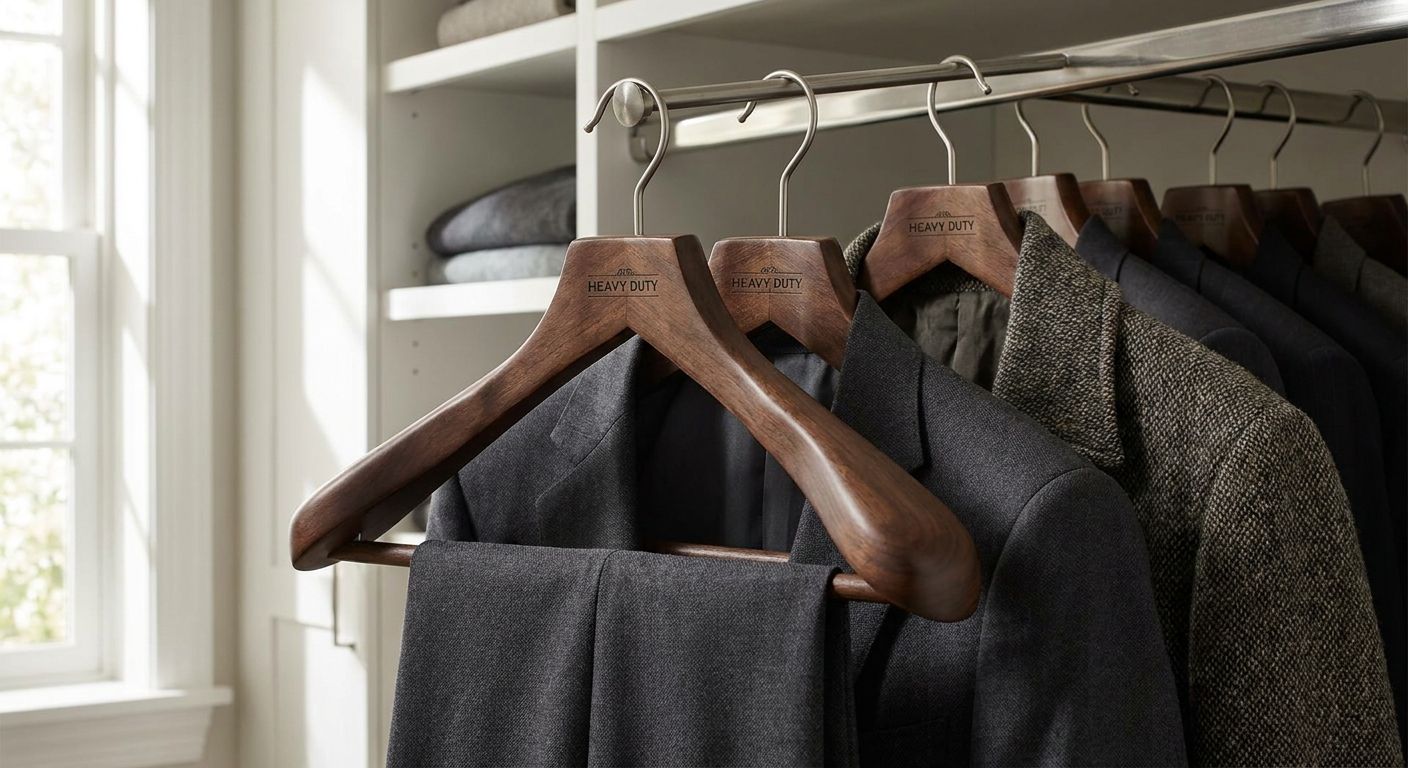
3. Heavy-duty plastic hangers: best for coats and outerwear
Outerwear needs a reinforced neck and thicker arm profile or the hanger cracks under repeated loading. A dedicated heavy-duty hangers guide for suits and coats breaks down the load points that matter most for jackets, blazers, and coats.
Heavy-duty hangers pros:
- Reinforced neck resists the snapping that kills cheap plastic under coat weight
- Wider arms keep shoulder shape intact on structured jackets
- Holds up under daily loading and unloading without visible wear
Heavy-duty hangers cons:
- Bulkier profile eats more rail space than a standard hanger
- Overkill for lightweight blouses or knitwear
Best for: coats, blazers, and structured outerwear. Verdict: Buy for any section carrying heavier garments.
4. Slimline plastic hangers: best for space-saving boutique racks
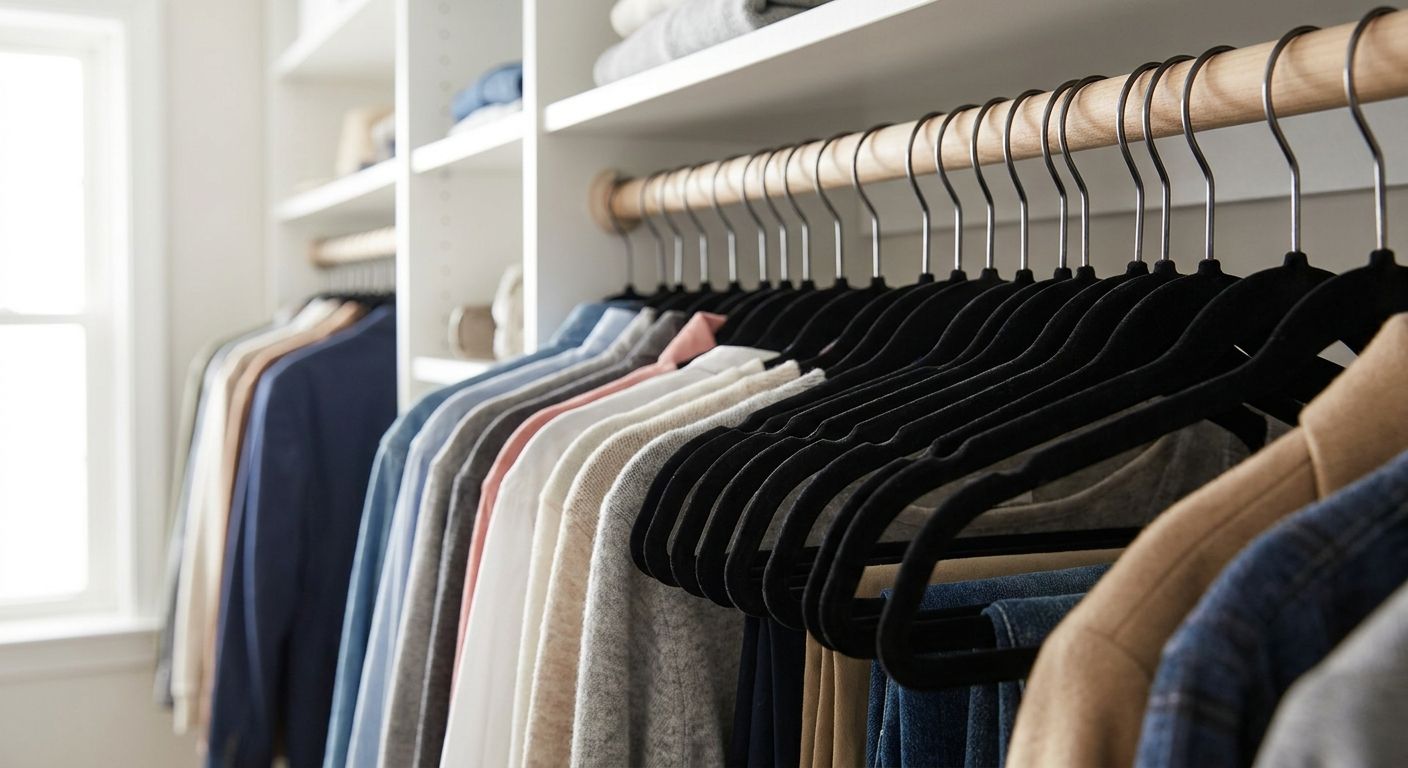
A tight boutique floor in 2026 can't afford bulky hangers eating into display space. Slimline profiles pack more stock per linear foot, which matters most in small-footprint stores. The same space-saving logic applies to the velvet hangers for slim, space-saving storage guide if you're comparing plastic against velvet-flocked alternatives.
Slimline hangers pros:
- Fits noticeably more garments per rail section
- Keeps a small boutique floor from looking cluttered
- Cheap enough to swap out a whole rail without a major spend
Slimline hangers cons:
- Lower weight tolerance than standard or heavy-duty hangers
- Not suited to coats or heavier fabrics
Best for: tight boutique layouts where rail space is the constraint. Verdict: Buy for small-footprint stores.
5. Kids-size plastic hangers: best for children's clothing sections
Adult-width hangers on a kids' rail look sloppy and let small garments slide to the center. Kids-size plastic hangers run 25-30cm (10-12 inches), matching the actual shoulder width of children's clothing.
Kids-size hangers pros:
- Correct width keeps small garments hanging straight, not bunched
- Lightweight enough for staff and older kids to handle at low display heights
- Cheap to stock a dedicated section without inflating your hanger budget
Kids-size hangers cons:
- Only useful in a kids section — no crossover with adult stock
- Easy to lose track of if mixed into general hanger storage
Best for: children's clothing sections. Verdict: Buy if you carry kids' apparel at all.
6. Non-slip (rubber-coated) plastic hangers: best for silky and slippery fabrics
Silk, satin, and slippery synthetics slide off smooth plastic constantly, which means garments end up on the floor and staff spend time re-hanging stock. A rubberized or textured coating solves that specific problem.
Non-slip hangers pros:
- Textured grip holds slippery fabrics that plain plastic can't
- Reduces floor damage and re-folding time for delicate stock
Non-slip hangers cons:
- Costs more per unit than plain plastic hangers
- Unnecessary for cotton, denim, or most everyday apparel
Best for: silk, satin, and other slippery fabrics. Verdict: Buy selectively for the sections that need it, not the whole floor.
How this ranking was built
Each type is scored against the criteria above: load-bearing strength, shoulder shape, standard width, grip surface, rail density, and consistency across a floor. No two items compete for the same use case, which is why a store in 2026 typically stocks three or four of these types across different sections rather than picking one winner for everything.
Which plastic hangers should you choose?
If you're stocking a single boutique floor and need one default, standard tubular plastic hangers cover the widest range of garments at the lowest cost per unit. Add heavy-duty hangers the moment coats or blazers enter your stock, and add kids-size hangers the moment children's apparel does.
Slimline and non-slip types are upgrades for specific pressure points — rail space and slippery fabric — not replacements for your everyday stock. Mixing two or three types by section, rather than committing to one hanger for the whole store, is what keeps a 2026 retail floor looking deliberate instead of improvised.
FAQ
What's the best plastic clothes hanger for a boutique in 2026?
Standard tubular plastic hangers at 40-45cm width cover most everyday apparel and work as the default for a mixed-stock boutique. Add heavy-duty or kids-size hangers only for the sections that need them.
Are plastic hangers better than wooden hangers for retail?
Plastic hangers are lighter and cheaper to stock in bulk, while wooden hangers project a premium look for higher-end sections. Many fashion houses use plastic for everyday stock and wooden for feature displays.
Do plastic hangers hold up in Nigeria's humidity?
Quality plastic hangers with reinforced necks hold up fine under normal retail handling. Thin, cheap plastic is what cracks first, regardless of climate.
What width should adult plastic hangers be?
Standard adult plastic hangers run 40-45cm (16-18 inches) to match typical shirt and dress shoulder widths. Narrower hangers distort garment shape over time.
What size hangers work for children's clothing?
Kids-size plastic hangers run 25-30cm (10-12 inches), matching the shoulder width of children's garments. Using adult hangers on kids' stock lets small items slide and bunch.
Do I need non-slip hangers for every section?
No. Non-slip or rubber-coated hangers are worth the extra cost only for silk, satin, and other slippery fabrics. Standard plastic hangers are fine for cotton, denim, and most everyday stock.
How many hanger types should a retail store stock?
Most stores in 2026 stock three to four types: standard tubular for general apparel, heavy-duty for outerwear, kids-size if applicable, and non-slip for delicate fabrics. One hanger type rarely covers a full floor well.
Can plastic hangers replace velvet hangers for space-saving racks?
Slimline plastic hangers save rail space at a lower cost, but velvet-flocked hangers grip garments better and prevent slipping in tight, closely packed racks.
One last thing
The hanger mismatch that costs stores the most isn't a broken shoulder — it's using one width across every section. A rail where kids' rompers hang on 40cm adult hangers looks unfinished even when the stock itself is good, and it's the cheapest fix on this whole list to correct before 2026 stock intake.