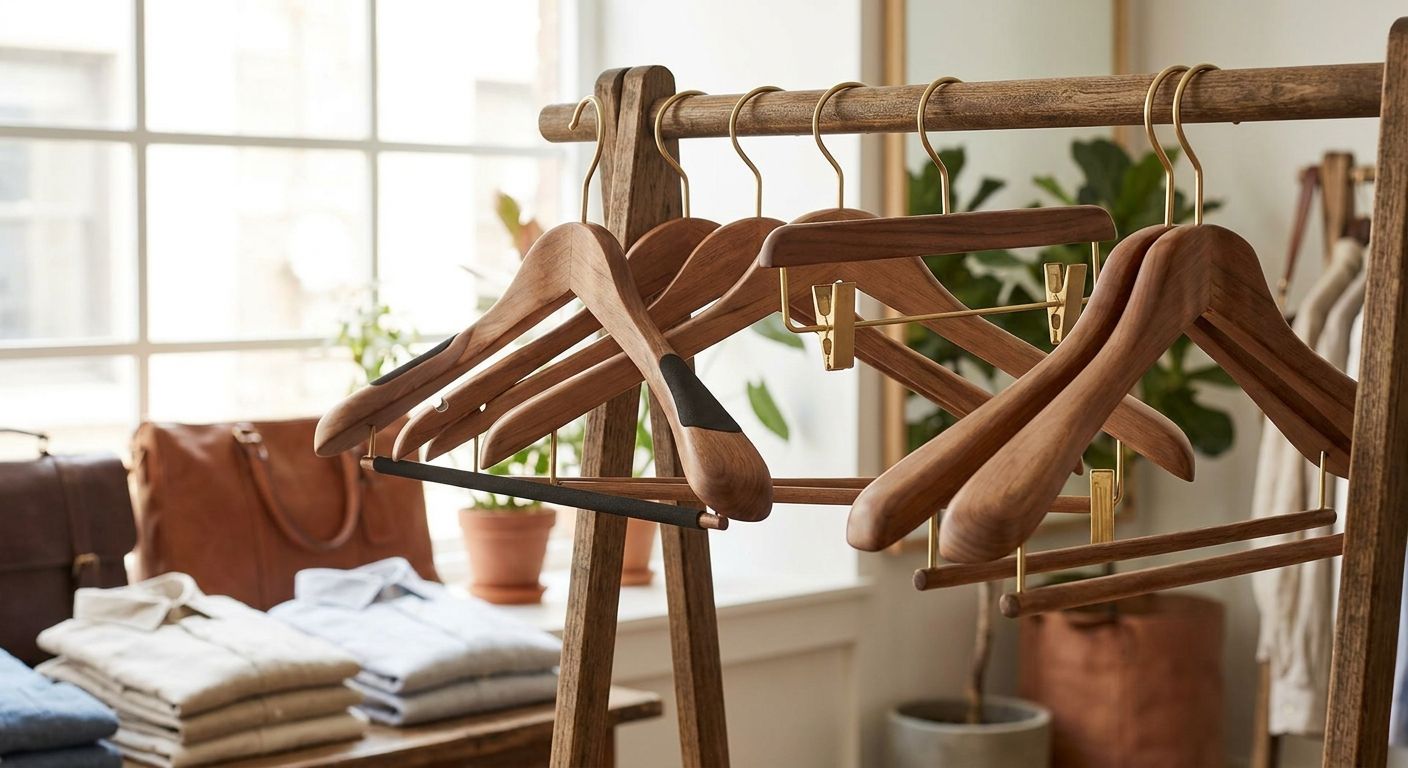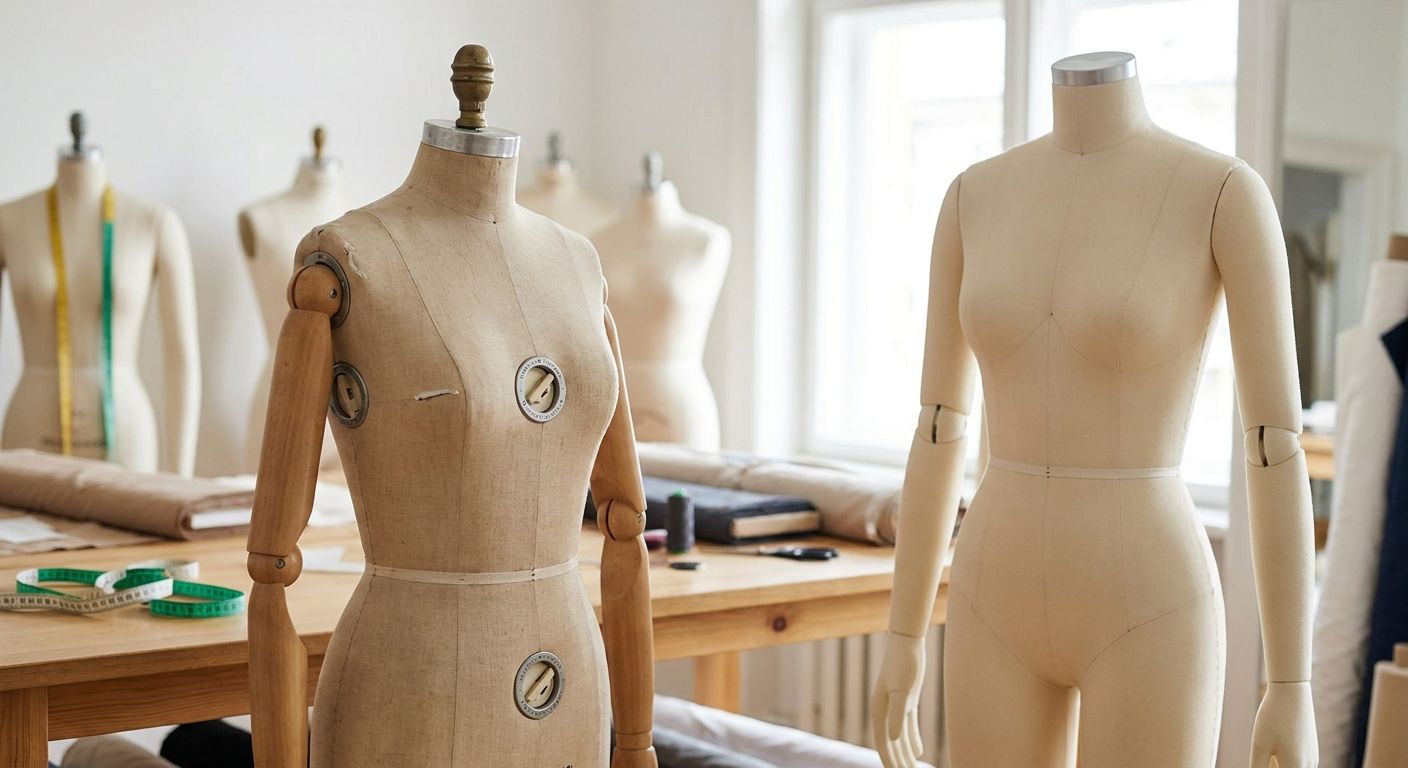
Choosing the right dress form in 2026 comes down to one question: what kind of garment work do you actually do? A dressmaker fitting bridal gowns needs a different form than a home sewist drafting her first bodice block, and no single dress form covers both jobs well.
- The adjustable dial dress form wins for dressmakers working across multiple client sizes in 2026.
- Pinnable foam dress forms are the pick for draping and pattern drafting because you can pin anywhere on the torso.
- Collapsible shoulder dress forms are worth the extra moving parts if you sew fitted necklines and set-in sleeves.
- Full-body dress forms with legs matter for bridal and gown fittings where hemline and silhouette need checking.
- Budget student dress forms are the right first purchase for hobby sewists, not working ateliers.
Why this matters
A dress form is not a decorative stand. It is the tool that decides whether a garment fits before a client ever tries it on, and the wrong choice wastes fabric, time, and client trust.
Dressmakers and small fashion houses across Nigeria often buy one form and expect it to do everything: draping, pinning, hemming, and display. That single-form approach works for a hobbyist. It breaks down fast once you're producing for multiple body types or running a studio that fits both everyday wear and occasion pieces. Whogohb stocks the full range of dress form types alongside mannequins, racks, and sewing tools, which is the fastest way to see the differences side by side before committing to one.
What makes the best dress form
Before ranking anything, judge each dress form type against the same criteria:
- Size adjustability — can it flex to more than one bust, waist, and hip measurement, or is it fixed at one size
- Pinnability — does the surface take pins directly, or does it require tape or a padded cover first
- Stand and base stability — does the tripod or pedestal hold steady during heavy pinning and draping sessions
- Garment removal — can you slide a finished piece off cleanly, or do you have to unpin and disturb the shape
- Durability under daily studio use — does the mechanism or foam hold up after months of pinning and adjusting
- Storage footprint — does it fold, detach, or need a permanent corner of the workroom
At a glance: dress form types compared
| Dress form type | Best for | Standout feature | Key limitation |
|---|---|---|---|
| Adjustable dial dress form | Multi-size client work | Dials resize bust, waist and hip without buying separate forms | Dial mechanisms wear faster under heavy daily use |
| Pinnable foam dress form | Draping and pattern drafting | Needle pins hold anywhere on the torso surface | Fixed size, no dial adjustment at all |
| Collapsible shoulder dress form | Fitted necklines and set-in sleeves | Shoulders fold inward so finished garments slide off clean | More moving parts to maintain than a solid form |
| Full-body dress form with legs | Bridal and gown fittings, retail display | Legs and stand reveal the full hemline and silhouette | Bulkier and harder to store in a small studio |
| Budget student dress form | Students and hobby sewists | Lightweight and quick to set up | Limited adjustment, shorter working lifespan |
1. Adjustable dial dress form: best for dressmakers fitting multiple client sizes
An adjustable dial dress form uses a set of dials, usually along the bust, waist, and hip, to expand or contract the torso in small increments. One form can approximate a range of client measurements instead of forcing you to own five fixed-size forms.
Adjustable dial dress form pros:
- Covers a size range instead of one fixed measurement
- Cuts down on how many forms a small studio needs to own
- Useful for custom orders where the client's exact size isn't known upfront
Adjustable dial dress form cons:
- The dial mechanism is metal and plastic, and it wears out faster than solid foam under years of daily adjustment
- The torso surface between dial sections doesn't always take pins cleanly
- Adjustment only approximates a real body; it won't replicate a specific client's exact posture or shoulder slope
Best for: dressmakers and small fashion houses fitting different clients week to week. Verdict: Buy.
2. Pinnable foam dress form: best for draping and pattern drafting
A pinnable foam dress form has a solid foam core wrapped in canvas or linen, and the entire surface takes pins directly. This is the standard tool taught in pattern-drafting and draping classes because you can pin fabric anywhere to shape a bodice or skirt block from scratch.
Pinnable foam dress form pros:
- Full-surface pinning makes draping and pattern development faster
- The foam holds shape well over repeated pinning sessions
- Canvas or linen covering is easy to mark directly with chalk or pencil
Pinnable foam dress form cons:
- Fixed at one size, so it only matches a narrow set of clients or a single house standard
- No dial adjustment if measurements shift
- Heavier and less portable than a collapsible model
Best for: pattern drafters and dressmakers who develop original blocks rather than fit ready measurements. Verdict: Buy.
3. Collapsible shoulder dress form: best for fitted necklines and set-in sleeves
A collapsible shoulder dress form has shoulder sections that fold inward on a hinge or removable pin. That means you can slide a finished garment with a fitted neckline or set-in sleeve off the form without stretching the seams or forcing it over a rigid shoulder.
Collapsible shoulder dress form pros:
- Protects tailored necklines and sleeve seams during removal
- Reduces the risk of stretching structured garments like jackets
- Works well for close-fitting bodices that a standard form would damage on removal
Collapsible shoulder dress form cons:
- More moving parts than a solid form, which means more to check and maintain
- Shoulder hinges can loosen with age and need periodic tightening
- Typically fixed at one size, same limitation as a standard foam form
Best for: dressmakers producing structured jackets, fitted bodices, and tailored blouses. Verdict: Buy.
4. Full-body dress form with legs: best for bridal and gown fittings
A full-body dress form includes legs and a stand that shows the complete silhouette from shoulder to hem. For gowns, bridal wear, and floor-length garments, this is the only form type that lets you check hemline balance and drape without a live model.
Full-body dress form pros:
- Shows the true hemline and silhouette on long garments
- Useful for retail-style display in a showroom or fitting studio
- Gives clients a realistic view of how a finished gown will hang
Full-body dress form cons:
- Takes up significantly more floor space than a torso-only form
- Heavier to move between a workroom and a fitting area
- Overkill for a studio that only sews tops, separates, or children's wear
Best for: bridal ateliers, gown specialists, and studios that display finished pieces. Verdict: Buy if you sew full-length garments; Skip if you don't.
5. Budget student dress form: best for students and hobby sewists
A budget student dress form is a lightweight, non-adjustable model built for learning rather than daily commercial use. It gets a beginner through pattern-making classes and early home-sewing projects without the cost or bulk of a professional form.
Budget student dress form pros:
- Simple to set up with no dial system to learn
- Light enough to move around a small apartment or shared workspace
- Enough for learning basic pinning, draping, and fit checks
Budget student dress form cons:
- Foam and stand quality don't hold up to years of daily studio pinning
- No size adjustment as your skills and client base grow
- Not built for the pin density a working dressmaker needs
Best for: students, hobby sewists, and anyone sewing occasionally rather than running a business. Verdict: Buy for learning; Upgrade once you take paid orders.
“If you're fitting more than one body type a month, a fixed-size dress form is already the wrong tool.”
How we ranked these dress forms
Each type was judged against the six criteria above: adjustability, pinnability, stand stability, garment removal, durability, and storage footprint. No two entries compete for the same use case, so the ranking works as a decision tree rather than a leaderboard — match your work type to the matching row, not to whichever sounds most "professional."
Compare dress forms before you buy
See the full range of dress forms and mannequins stocked for Nigerian dressmakers.
Which dress form should you choose in 2026?
For most working dressmakers, the adjustable dial dress form is the default pick in 2026 — it covers a range of client sizes and cuts the number of forms a small studio needs to stock. If your work is mostly draping and original pattern development, the pinnable foam form earns its place instead. Bridal and gown specialists should not skip a full-body form with legs; hemline checks simply don't work on a torso-only stand. Budget student forms are a fine entry point, but plan to replace one once you start taking paid orders rather than practice pieces.
Cost is a real factor in that decision, and it varies a lot by type, material, and import source. The breakdown on mannequin costs in Nigeria covers what drives price differences between fixture types, which applies directly when budgeting for a dress form alongside display mannequins.
FAQ
What's the best dress form for a beginner dressmaker?
A budget student dress form is the best starting point because it's lightweight and simple to set up with no dial system to learn. Upgrade to an adjustable dial or pinnable foam form once you're sewing for paying clients rather than practice projects.
Is an adjustable dress form better than a fixed-size one?
An adjustable dial dress form is better for dressmakers fitting multiple client sizes, since the dials resize bust, waist and hip without buying separate forms. A fixed-size pinnable foam form is better for draping and pattern drafting where full-surface pinning matters more than size flexibility.
How do I choose the right dress form size?
Match the dress form to your most common client measurement, or choose an adjustable dial model if your clients vary. A form that's too far from your actual measurements makes fitting checks unreliable no matter which type you buy.
Can a dress form replace a real fitting model?
A dress form gets a garment 80-90% of the way to fit but doesn't replicate a specific person's posture, shoulder slope, or movement. Professional dressmakers use a dress form for construction and draping, then confirm final fit on the actual client.
What's the difference between a dress form and a mannequin?
A dress form is a working tool built for pinning, draping, and construction, usually torso-only and covered in pinnable fabric. A mannequin is built for display, often full-body with a fixed painted or molded surface that doesn't take pins.
Do dress forms include a stand and legs?
Most dress forms come on a tripod or pedestal stand but stop at the hip or thigh. Full-body dress forms with legs are a separate category, built specifically for bridal, gown, and full-length garment fittings.
How much does a dress form cost in Nigeria in 2026?
Cost varies by adjustability, material, and whether the form is imported or locally assembled, so check current listings rather than relying on a fixed figure. Adjustable dial forms typically cost more than fixed foam forms because of the added mechanism.
Should a tailoring business own more than one dress form?
Yes, most working studios eventually need at least two: one adjustable form for client fittings and one pinnable foam form for draping and pattern development. A single form forces compromises on either flexibility or pinnability.
One last thing
The detail most dressmakers miss: a collapsible-shoulder form isn't just a nice-to-have for jackets, it's the only type that lets you remove a finished set-in sleeve without re-stretching the seam you just pressed. Skip it for loose garments, but treat it as required equipment the moment tailored outerwear enters your order book.