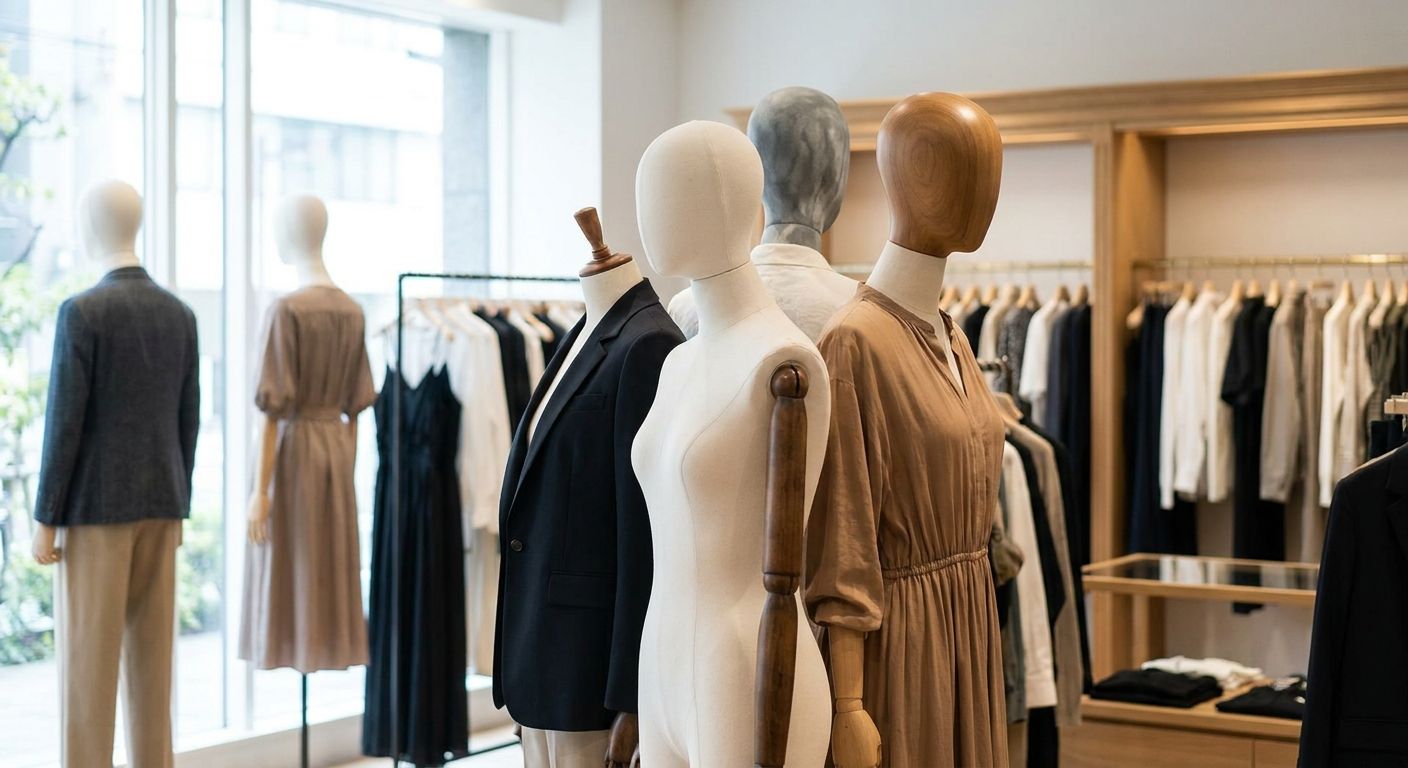
Picking the right headless mannequin comes down to matching the body type, size range, and base style to how you actually display clothes. Best overall: Whogohb's female headless mannequin range for boutique displays. Best for menswear: Whogohb's male headless mannequin. Best for inclusive sizing: the plus-size headless mannequin. Best for tailoring and sewing work: the torso-only dress form.
- Whogohb's female headless mannequin range is the strongest all-around pick for boutique clothing displays in 2026.
- Torso-only dress forms without arms or legs work best for tailoring, alterations, and sewing workshops, not retail windows.
- Plus-size headless mannequins matter for stores carrying extended size ranges — a fitted display sells the size, not just the garment.
- Adjustable-stand mannequins suit pop-up shops and stores that rotate window displays often.
- Linen-covered forms show lingerie, swimwear, and soft knitwear without the plastic sheen of standard fiberglass bodies.
Why this matters
A headless mannequin does one job: hold the garment's shape without competing for attention with a painted face or styled wig. Retailers use them because shoppers focus on fit and drape, not on the mannequin's expression, and because a headless body is cheaper to store, ship, and swap between seasons than a full figure.
The wrong pick creates its own problems. A menswear brand using an unstructured, softer-bodied form loses shoulder definition. A boutique that only stocks one size mannequin makes plus-size garments look boxy on the rack even when the fit is good. Getting the category right before you order matters more than the finish or fabric wrap.
Budget is the other variable. Costs shift by material, size, and finish, and Whogohb's mannequin cost guide for Nigeria breaks down what drives the range in the current Nigerian market. Check it before you commit to a bulk order.
What makes the best headless mannequins
- Body accuracy — shoulder width, waist, and hip proportions that match the size range you actually sell
- Base and neck stability — a mannequin that wobbles or tips under a heavy coat is a liability on a shop floor
- Material durability — fiberglass and reinforced foam hold shape through repeated dressing; cheap hollow plastic cracks at the neck joint
- Ease of dressing — jointed shoulders and removable limbs speed up window changes; rigid one-piece bodies slow staff down
- Size inclusivity — plus-size and petite options signal the range you carry before a shopper even reads a tag
- Finish versatility — matte, skin-tone, or linen-wrapped surfaces that suit your store's visual merchandising style
At a glance
| Mannequin type | Best for | Standout feature | Key limitation |
|---|---|---|---|
| Female headless mannequin | Boutique clothing displays | Accurate waist-to-hip proportion | Limited to standard sizing unless custom ordered |
| Male headless mannequin | Menswear and tailoring shops | Structured shoulder line | Less flexible for softer, draped fabrics |
| Plus-size headless mannequin | Inclusive-size retailers | True-to-size body shape | Fewer stockists carry it in bulk |
| Torso-only dress form | Sewing and alteration work | No arms or legs to interfere with pinning | Not suited to full-outfit window displays |
| Adjustable-stand mannequin | Pop-up shops, rotating windows | Height and angle adjustment | Base takes up more floor space |
| Linen-covered headless form | Lingerie and soft knitwear | Fabric surface pins directly, no slipping | Shows wear faster than fiberglass |
1. Female headless mannequin: best for boutique clothing displays
This is the standard body for dress shops, boutiques, and general womenswear retail across Nigeria in 2026. Whogohb's range covers the proportions most commonly used for dresses, tops, and separates, with a neck and shoulder joint built to survive repeated dressing.
Female headless mannequin pros:
- Matches the sizing most womenswear inventory is cut to
- Neck joint stays stable under layered outfits
- Works equally well in a window display or on a sales floor plinth
Female headless mannequin cons:
- Standard proportions won't flatter plus-size or petite-cut garments
- Fiberglass bodies need careful handling during transport to avoid chips
Best for: boutiques and dress shops running seasonal window changes. Verdict: Buy.
2. Male headless mannequin: best for menswear and tailoring shops
Structured shoulders and a straighter torso line make this the right choice for suits, shirts, and outerwear. Tailors in Lagos and Abuja commonly use this body for fitting demonstrations as well as retail display, since the shoulder shape holds a jacket's cut without sagging.
Male headless mannequin pros:
- Holds structured jackets and blazers without collapsing the shoulder line
- Straight torso suits both casualwear and formal menswear
- Durable enough for daily dressing and undressing in a tailoring shop
Male headless mannequin cons:
- Too rigid for softer, draped menswear styles like unstructured linen shirts
- Bulkier to store than a female form when not on display
Best for: menswear retailers and tailoring workshops that need the display to double as a fitting reference. Verdict: Buy.
3. Plus-size headless mannequin: best for inclusive-size retailers
A plus-size form solves a problem most stores ignore until a customer points it out: garments cut for extended sizes look wrong on a standard-size body. This mannequin carries true-to-size hip and waist proportions so the display matches what's actually in stock.
Plus-size headless mannequin pros:
- Shows extended-size garments the way they're meant to fit
- Signals size inclusivity to shoppers browsing the window
- Reduces returns tied to shoppers misjudging fit from an inaccurate display
Plus-size headless mannequin cons:
- Harder to source in bulk than standard sizing
- Takes up more storage space between seasons
Best for: retailers whose inventory includes extended or curve sizing. Verdict: Buy.
4. Torso-only dress form: best for tailoring and sewing work
No arms, no legs, just a pinnable torso on a stand. This isn't a window-display piece — it's a working tool for pattern draping, alterations, and fitting checks before a garment goes to a customer.
Torso-only dress form pros:
- Pins and drapes directly without limbs getting in the way
- Adjustable height on most stands suits standing or seated tailoring work
- Takes far less floor space than a full-body mannequin
Torso-only dress form cons:
- Useless for full-outfit retail display since there's no lower body or arms
- Not a substitute for a display mannequin if window merchandising is the goal
Best for: tailors, seamstresses, and sewing workshops doing fitting or pattern work rather than retail display. Verdict: Buy — but only if the use case is production, not display.
5. Adjustable-stand headless mannequin: best for pop-up shops and rotating displays
Stores that change their window layout often — pop-ups, seasonal kiosks, multi-brand showrooms — need a mannequin that adjusts height and angle without buying a new base each time. The stand does the flexible work here, not the body.
Adjustable-stand mannequin pros:
- Height adjustment lets one mannequin serve multiple display heights
- Rotating base speeds up rearranging a storefront window
- Suits temporary retail setups that move locations
Adjustable-stand mannequin cons:
- The stand itself takes up more floor space than a fixed base
- Adjustment mechanisms wear faster with heavy daily use
Best for: pop-up retailers and stores that rotate window displays frequently. Verdict: Buy for temporary or rotating setups.
6. Linen-covered headless mannequin: best for lingerie and soft knitwear
A fabric-wrapped surface pins directly without garments slipping, which matters for lingerie, swimwear, and fine knitwear that slide off a smooth fiberglass body. The linen surface also reads softer visually, which suits intimate apparel merchandising.
Linen-covered mannequin pros:
- Fabric surface holds pins for adjusting fit without marking the body
- Softer visual finish suits lingerie and delicate knitwear
- Garments don't slide off the way they do on smooth fiberglass
Linen-covered mannequin cons:
- Fabric shows wear and staining faster than a hard finish
- Not ideal for heavier outerwear or structured tailoring
Best for: lingerie, swimwear, and soft knitwear retailers. Verdict: Buy for soft-goods display specifically.
Browse Whogohb's mannequin range
Compare body types and finishes before placing a bulk order.
How we ranked
Each mannequin type was weighed against the six criteria above: body accuracy, base stability, material durability, ease of dressing, size inclusivity, and finish versatility. No single type wins on every dimension — that's the point. A dress form built for pinning fabric will always lose on retail display, and a rigid male form will always lose on soft drape. The ranking assigns each type its own use case rather than forcing one winner across every scenario.
Which headless mannequin should you choose?
If you're running a boutique or general womenswear floor in 2026, start with the female headless mannequin — it covers the widest range of everyday retail display needs. Menswear and tailoring operations should default to the male headless mannequin for the structured shoulder line. If your inventory includes extended sizing, the plus-size headless mannequin isn't optional — it's the display that actually matches what's on the rack. Tailors and workshops doing fitting work should skip retail-style bodies entirely and go straight to a torso-only dress form.
FAQ
What is a headless mannequin used for?
A headless mannequin displays clothing without a face or hairstyle drawing attention away from the garment. Retailers use them for windows, sales floors, and photography where the focus should stay on fit and drape.
What's the best headless mannequin for boutique window displays?
A female or male headless mannequin with accurate body proportions works best for boutique window displays, depending on whether the store sells womenswear or menswear. The body shape should match the sizing most commonly stocked.
Are plus-size headless mannequins available in Nigeria?
Yes, plus-size headless mannequins are available through fixture suppliers like Whogohb, though they're typically harder to source in bulk than standard sizing. Retailers carrying extended sizes should order these specifically rather than relying on a standard-size body.
How much does a headless mannequin cost in Nigeria in 2026?
Cost depends on material, size, and finish, and varies across suppliers. A dedicated cost breakdown for the current Nigerian market is available through Whogohb's mannequin pricing guide.
Is a headless mannequin better than a full mannequin for clothing display?
For most retail display purposes, yes — a headless mannequin keeps focus on the garment and is easier to store and transport than a full figure with a molded head. Full mannequins suit brand storytelling displays where a face or expression adds to the concept.
What material are headless mannequins made from?
Most retail headless mannequins are made from fiberglass or reinforced foam, with some finished in linen or fabric wrap for soft-goods display. Fiberglass holds shape longest under repeated dressing and undressing.
Do headless mannequins come with a stand?
Most headless mannequins include a base or stand, and some models offer adjustable-height stands for stores that rotate display heights. Torso-only dress forms almost always include a stand since they can't stand independently.
Can a headless mannequin be used for tailoring or sewing work?
A torso-only dress form, not a full retail-style headless mannequin, is the right tool for tailoring and sewing work. It allows direct pinning and pattern draping without arms or legs getting in the way.
One last thing
The mistake most new retailers make isn't picking the wrong mannequin type — it's ordering one body style for an entire store that sells three different categories. A shop selling dresses, menswear, and lingerie needs at least two mannequin types on the floor, not one form doing every job badly. Match the body to the garment category first, then worry about finish.
Best headless mannequins for 2026 come down to matching body type to product category: female forms for boutique womenswear, male forms for structured menswear, plus-size forms for inclusive sizing, and torso-only dress forms strictly for production work, not display.