Heavy duty suit hangers matter more than most fashion house owners admit — a flimsy hanger warps a $200 jacket shoulder in under a month, and a boutique rail full of bent wire hangers looks cheap even when the clothes aren't.
Best overall: wood suit hangers with a contoured shoulder. Best for space-saving retail racks: chrome wire hangers. Best for silk and satin garments: velvet-flocked hangers. Best for heavy wool overcoats: extra-wide shoulder hangers. Best for full suit sets: combination hangers with a trouser bar.
- Wood suit hangers win overall for heavy duty suit hangers thanks to shoulder support and weight tolerance.
- Chrome wire hangers pack more garments per rail but flex under heavier wool coats.
- Velvet-flocked hangers stop silk and satin from sliding off the shoulder.
- Combination hangers with a trouser bar solve full-suit storage without a second unit.
- Whogohb stocks heavy duty hanger types across all five categories for fashion houses and boutiques.
Why this matters
A suit hanger isn't just storage — it's the last thing that shapes the garment before a customer or client sees it. Thin wire hangers leave shoulder dimples that don't shake out, and undersized hangers push jacket shoulders inward, killing the drape that made the suit look good on the mannequin in the first place.
For a Nigerian fashion house or boutique moving stock through Whogohb fixtures, tailoring, and menswear racks, the hanger is part of the presentation, not an afterthought. Get the shoulder width and material wrong and every suit on that rail looks worse than it is.
What makes the best heavy duty suit hangers
- Shoulder width and contour — a curved shoulder in the 17 to 19 inch range matches most menswear jacket sizes without stretching the seams.
- Weight tolerance — the hanger has to hold a fully lined wool jacket without bowing at the center.
- Swivel hook — a 360-degree rotating hook lets staff turn garments face-out on a rail without lifting the whole hanger off.
- Surface grip — flocked or notched surfaces stop silk, satin, and slippery linings from sliding to one side.
- Rail compatibility — the hanger's neck has to fit standard round and oval retail rails without jamming.
- Build durability — solid wood or reinforced plastic that survives daily handling on a sales floor without cracking.
Heavy duty suit hangers at a glance
| Hanger type | Best for | Standout feature | Key limitation |
|---|---|---|---|
| Wood suit hangers | Overall heavy duty use | Contoured 17-19 inch shoulder, solid build | Bulkier on tightly packed rails |
| Chrome wire hangers | Space-saving retail racks | Slim profile, high rail density | Bends under heavier wool coats |
| Velvet-flocked hangers | Silk and satin garments | Non-slip flocked surface | Weaker load capacity than wood |
| Extra-wide shoulder hangers | Heavy wool overcoats | Reinforced wide shoulder span | Takes up more rail width |
| Combination trouser-bar hangers | Full suit sets | Jacket and trouser storage in one unit | Bulkier for single-piece garments |
1. Wood suit hangers: best heavy duty hangers for daily retail handling
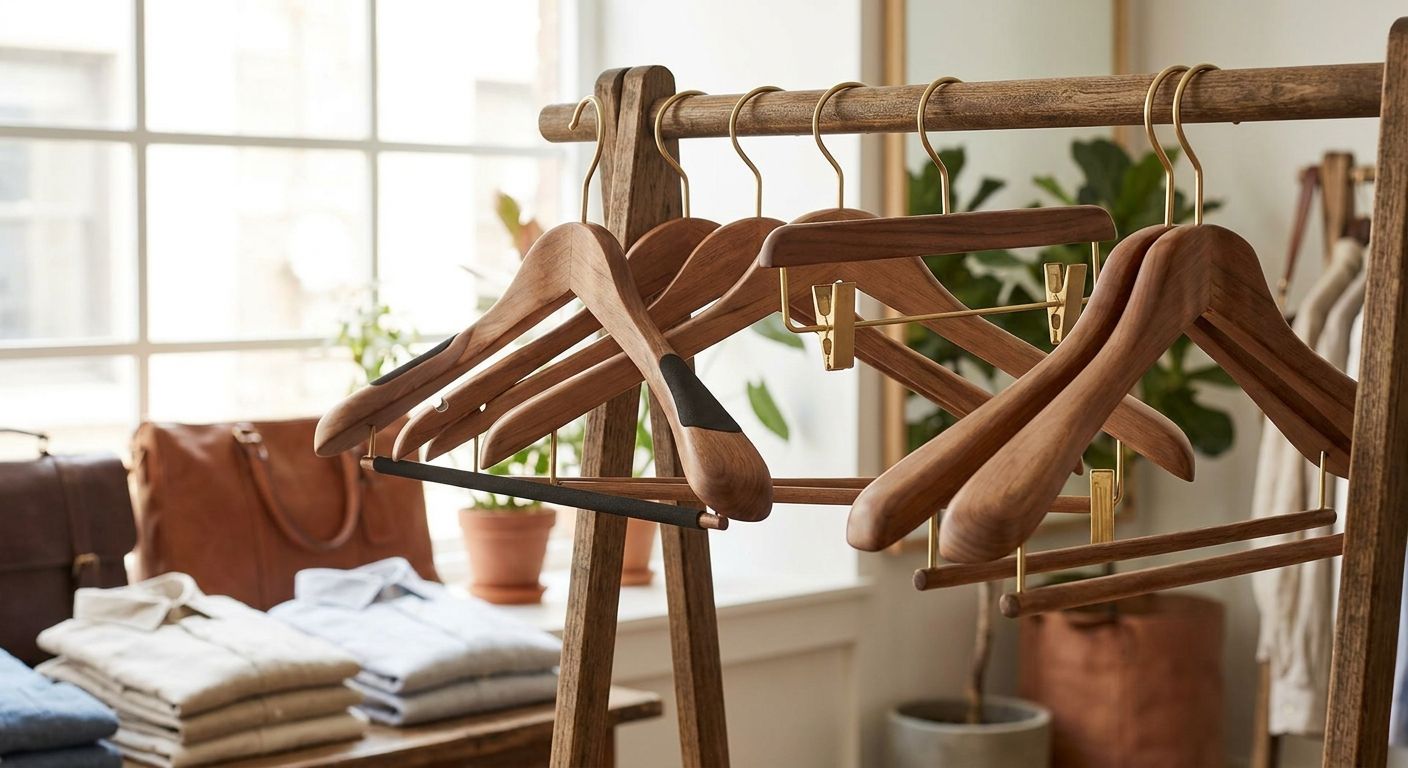
Wood suit hangers with a contoured shoulder are the standard pick for fashion houses that need a hanger surviving years of daily handling on a sales floor. The shoulder shape supports jacket seams the way a mannequin torso does, keeping the drape intact between fittings.
Wood suit hangers pros:
- Solid build holds up under repeated daily use
- Contoured shoulder protects jacket seams and structure
- Natural finish reads as premium on a retail rail
- Handles heavier fabrics like wool without bowing
Wood suit hangers cons:
- Bulkier than wire or plastic, so fewer fit per rail foot
- Heavier to move in bulk during restocking
Best for: fashion houses and boutiques prioritizing garment shape over rail density. Verdict: Buy.
2. Chrome wire hangers: best heavy duty hangers for space-saving racks
Chrome wire hangers are the pick when rail space is the constraint, not garment weight. The slim profile lets a boutique pack considerably more stock into the same rail footage compared to wood.
Chrome wire hangers pros:
- Slim design fits more garments per rail
- Lightweight for fast restocking and rearranging
- Chrome finish resists rust in humid storage rooms
- Low cost relative to wood or flocked alternatives
Chrome wire hangers cons:
- Flexes and bends under heavier wool overcoats
- Thin shoulder leaves marks on lighter fabrics over time
- Less premium look for front-of-store display
Best for: backroom stock and high-turnover racks where density matters more than presentation. Verdict: Buy for storage, skip for window display.
3. Velvet-flocked hangers: best heavy duty hangers for silk and satin
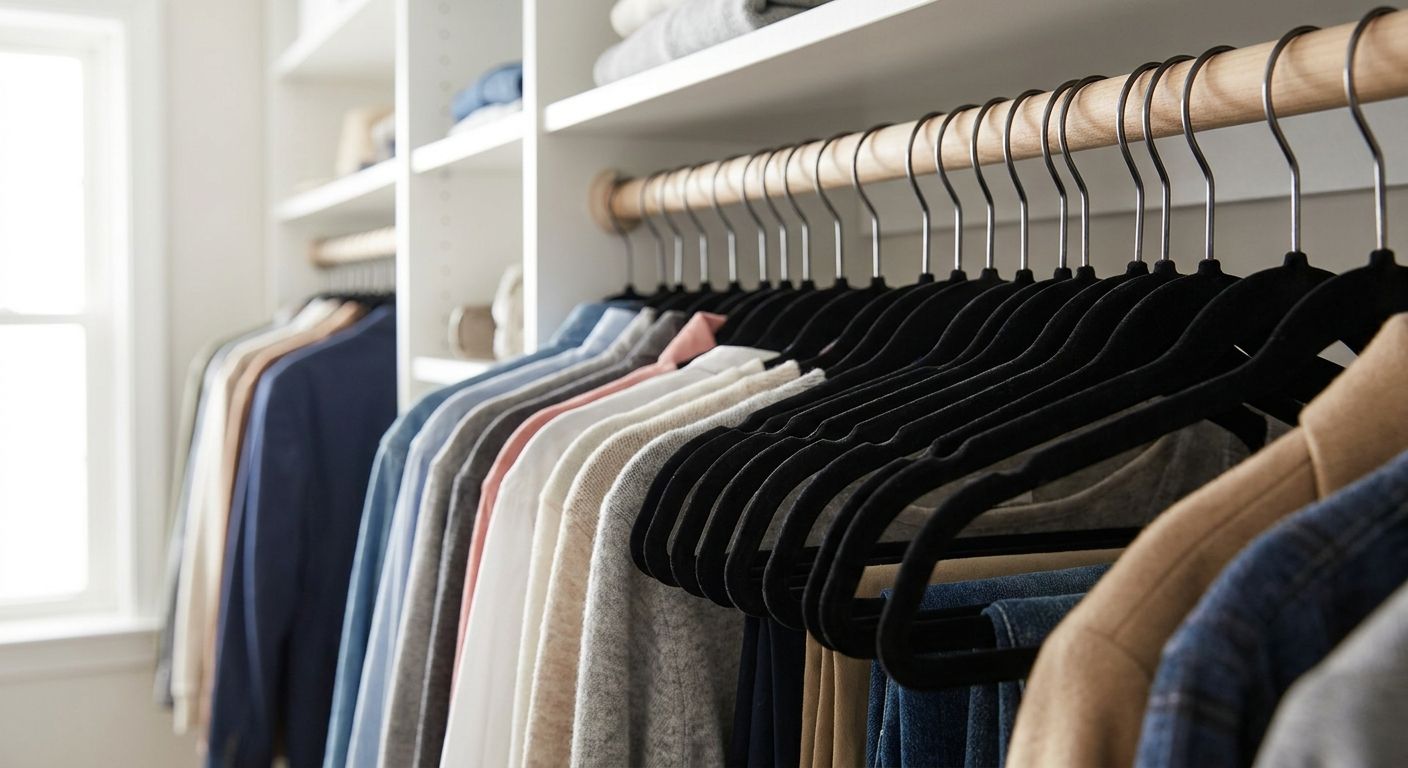
Velvet-flocked hangers solve the one problem wood and wire both have — slippery fabrics sliding off the shoulder. The flocked surface as thin as 0.2 inches also lets a rail hold noticeably more garments than a bulkier wood hanger.
Velvet-flocked hangers pros:
- Non-slip surface holds silk, satin, and lined jackets in place
- Thin profile fits more garments per rail than wood
- Uniform look across a display rail
Velvet-flocked hangers cons:
- Lower weight tolerance than solid wood
- Flocking wears down faster under heavy daily handling
- Not built for heavier wool overcoats
Best for: boutiques carrying silk shirts, satin-lined jackets, and lighter formalwear. Verdict: Buy.
4. Extra-wide shoulder hangers: best heavy duty hangers for wool overcoats
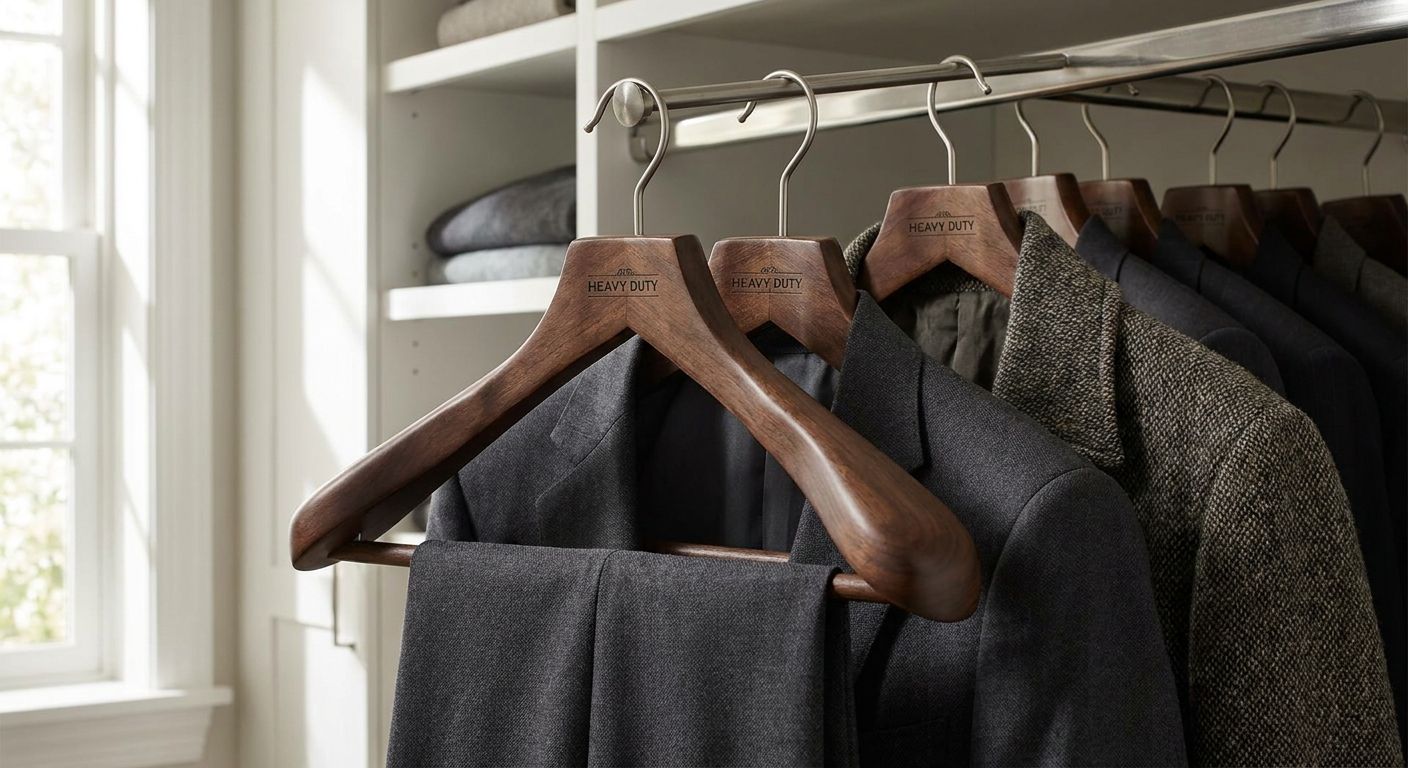
Extra-wide shoulder hangers exist for one job — supporting heavier, structured outerwear that a standard 17-19 inch suit hanger can't fill out properly. The wider span keeps a wool overcoat's shoulders squared instead of collapsing inward.
Extra-wide shoulder hangers pros:
- Reinforced shoulder span holds heavy wool coats without sagging
- Prevents shoulder collapse on structured outerwear
- Durable enough for repeated retail handling
Extra-wide shoulder hangers cons:
- Takes up more width per rail than standard hangers
- Overkill for lighter jackets and shirts
Best for: menswear sections carrying heavy coats, blazers, and structured outerwear. Verdict: Buy for outerwear racks only.
5. Combination trouser-bar hangers: best heavy duty hangers for complete suit sets
Combination hangers pair a jacket shoulder with a trouser bar or clips, storing a full suit on one unit instead of splitting it across two hangers. This matters most for tailoring shops selling made-to-measure sets where the jacket and trouser need to travel together.
Combination hangers pros:
- Stores jacket and trouser as one unit, reducing mismatched pairs
- Saves rail space compared to two separate hangers per suit
- Convenient for fitting rooms and delivery packaging
Combination hangers cons:
- Bulkier than a single-garment hanger
- Not efficient for single-piece items like shirts or dresses
Best for: tailoring shops and fashion houses selling complete suit sets. Verdict: Buy.
Stock the right hangers for your rails
Browse fashion house fixtures including hangers, racks and mannequins.
How we ranked
Each hanger type is scored against the six criteria above: shoulder contour, weight tolerance, swivel hook function, surface grip, rail compatibility, and build durability. No single hanger wins on all six — that's why the list splits by use case instead of naming one universal winner.
Which heavy duty suit hanger should you choose?
If you're stocking a single hanger type for a menswear section in 2026, wood suit hangers with a contoured shoulder are the safest default — they handle the widest range of jacket weights without distorting shape. Add chrome wire hangers for backroom storage, velvet-flocked hangers for silk and satin pieces, and a small run of extra-wide shoulder hangers for wool coats. A fashion house selling made-to-measure suits should add combination trouser-bar hangers on top of that base set rather than instead of it.
Menswear retailers building out a full menswear section can pair hanger choice with display fixtures — see Whogohb's male mannequins for menswear stores for how the two work together on a sales floor.
FAQ
What are the best heavy duty hangers for suits?
Wood suit hangers with a contoured 17-19 inch shoulder are the best heavy duty hangers for suits in 2026 because they support jacket weight without bowing. Chrome wire hangers work as a space-saving backup for backroom storage.
Are wood hangers better than plastic for suits?
Wood hangers generally outperform standard plastic for suits because the contoured shoulder holds shape better under repeated daily handling. Reinforced heavy duty plastic hangers can perform similarly but vary by build quality.
Do velvet hangers work for suits?
Velvet-flocked hangers work well for lighter suits, silk shirts, and satin-lined jackets because the non-slip surface stops fabric from sliding off the shoulder. They carry a lower weight tolerance than solid wood, so they're not ideal for heavy wool suits.
What hanger is best for wool overcoats?
Extra-wide shoulder hangers are best for wool overcoats because the reinforced shoulder span keeps the coat's structure squared instead of collapsing inward. Standard suit hangers are often too narrow to fill out a heavy overcoat properly.
Should suits and trousers be stored on the same hanger?
Combination hangers with a trouser bar or clips keep a jacket and trouser together as one unit, which reduces mismatched pairs in tailoring shops. Single-garment hangers are more space-efficient when jackets and trousers are sold separately.
How do I stop hangers from leaving shoulder marks on suits?
Use a hanger with a shoulder contour matching the jacket size, ideally in the 17-19 inch range for standard menswear. Flocked or padded surfaces reduce marking further on lighter, slippery fabrics.
One last thing
The hanger a customer sees on the rail is doing silent selling work — a warped shoulder or a hanger too narrow for the jacket makes even a well-made suit look off-the-rack cheap. Match the hanger to the garment weight, not the other way around, and the suit does the rest of the convincing on its own in 2026.