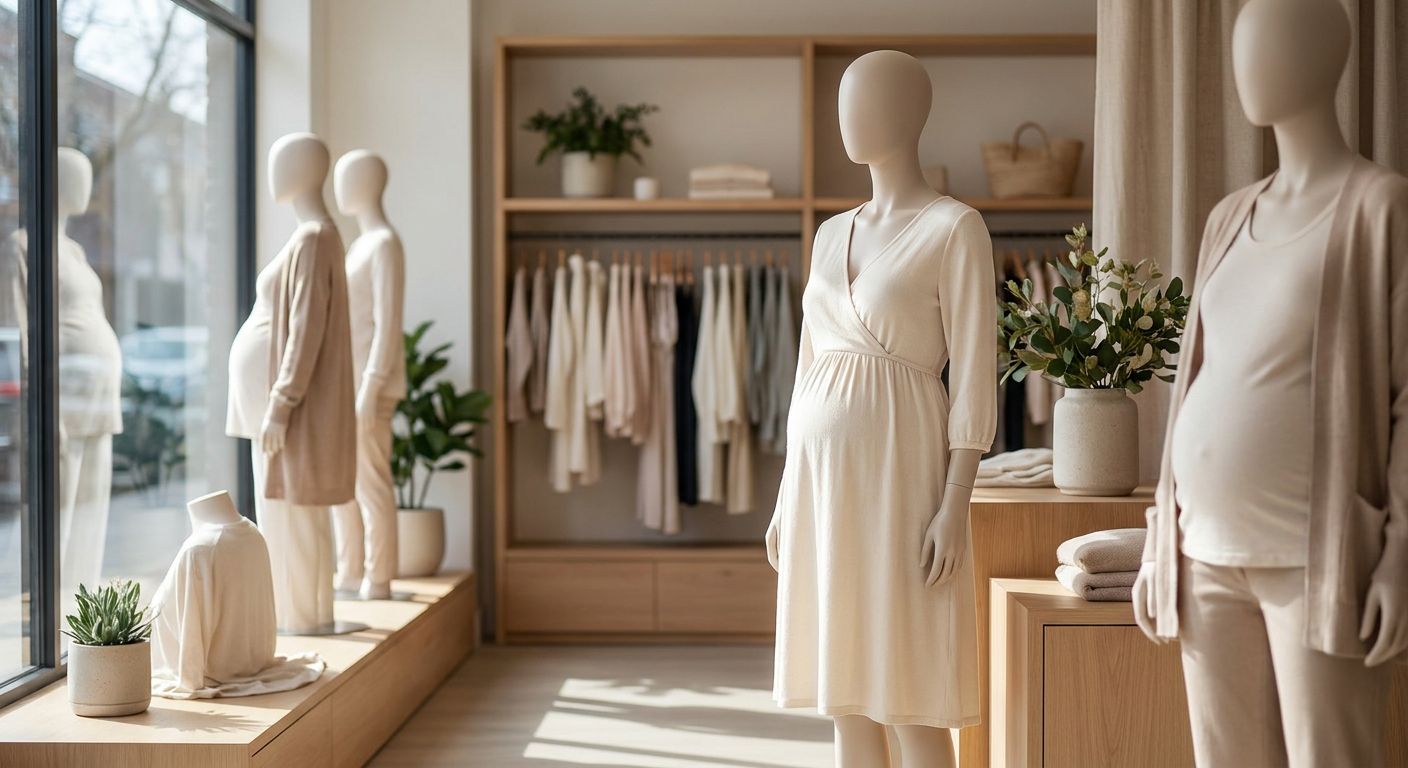
A pregnant mannequin isn't one product — it's five different builds, each solving a different display problem, from boutique windows to a tailor's workroom. Best overall: full-body fiberglass pregnant mannequin. Best for boutique windows: headless pregnant mannequin. Best for maternity dressmakers: adjustable pregnant dress form.
- A full-body fiberglass pregnant mannequin is the safest all-around pick for maternity wear displays in 2026.
- Headless pregnant mannequins dress faster and suit high-turnover boutique windows.
- Adjustable pregnant dress forms exist for pattern fitting across trimesters, not retail display.
- Fabric-covered pregnant mannequins avoid studio-light glare but need more cleaning than fiberglass.
- Abstract pregnant mannequins fit minimalist boutique branding but teach fit less clearly than realistic ones.
Why this matters
Maternity wear is a distinct category, and a standard female mannequin doesn't hold the shape properly. Get the wrong build and the garment sits wrong on the belly curve, the display looks stiff, and customers can't picture the fit across a full pregnancy. Whogohb's mannequin catalog carries builds across the categories below, so the choice comes down to what your space and staff actually need in 2026, not which one looks flashiest in a photo.
Most boutiques in Nigeria run maternity as a rotating section, not a permanent one, so the mannequin has to earn its floor space across three trimesters of styling changes, not just a single launch window.
What makes the best pregnant mannequin
- Removable or adjustable belly piece that reads correctly across different stages of pregnancy, roughly the 40-week range garments are designed for
- Realistic bust, hip and shoulder proportions matched to maternity sizing, not a regular female form with a bump glued on
- Weighted, non-tip base that survives repeated dressing and undressing without wobbling
- Finish — fiberglass gloss, matte fabric, or painted flesh tone — that matches your display lighting
- Head and arm styling (realistic, headless, or abstract) that fits your brand's visual identity
- Build quality that holds up to daily handling in a boutique or showroom, not just a single photo shoot
Pregnant mannequins at a glance
| Mannequin type | Best for | Standout feature | Key limitation |
|---|---|---|---|
| Full-body fiberglass pregnant mannequin | Overall maternity displays | Realistic belly curve and proportions | Heavier, needs more floor space |
| Headless pregnant mannequin | Boutique window displays | Faster dressing, keeps focus on the garment | No face, less "theatre" for premium windows |
| Adjustable pregnant dress form | Dressmakers and maternity tailors | Belly panel adjusts across trimesters | Not finished for public-facing retail display |
| Fabric-covered pregnant mannequin | Soft merchandising and photography | Pinnable fabric surface, no glare under lights | Fabric marks faster than fiberglass |
| Abstract pregnant mannequin | Minimalist, high-end boutiques | Clean lines, no facial detail to date the look | Teaches fit less clearly to junior staff |
1. Full-body fiberglass pregnant mannequin: best overall for maternity displays
This is the standard maternity retail build: a full female form with a realistic belly curve, styled head, arms, and a stable base rod. It handles full-outfit styling from shoes to headwear, which is why most stores default to it first.
Full-body fiberglass pregnant mannequin pros:
- Realistic silhouette that customers instantly read as "maternity"
- Sturdy enough for daily re-dressing without damage
- Works for complete looks, not just torso pieces
Full-body fiberglass pregnant mannequin cons:
- Heavier and bulkier than headless or dress-form builds
- Takes more storage room once the maternity season winds down
Best for: stores that want one mannequin to cover the whole maternity collection. Verdict: Buy.
2. Headless pregnant mannequin: best for boutique window displays
Same belly curve and torso proportions as the full-body version, minus the head. That single change speeds up dressing turnaround and keeps shopper attention on the garment rather than a painted face.
Headless pregnant mannequin pros:
- Faster to dress and re-dress between window changes
- No face means no styling decisions around hair or expression
- Cheaper to keep looking current since there's no face to date the look
Headless pregnant mannequin cons:
- Less storytelling impact for premium window displays
- Can't double up for headwear or accessory-focused merchandising
Check the full breakdown on headless mannequins for clothing displays if your window turns over every week. Best for: high-turnover boutique windows. Verdict: Buy.
3. Adjustable pregnant dress form: best for maternity dressmakers
This is a workroom tool, not a display piece. The torso includes a belly insert or expandable panel that grows to mimic different trimester stages, letting a tailor fit and adjust maternity garments without a live model on hand.
Adjustable pregnant dress form pros:
- Adjusts across trimester stages for accurate pattern fitting
- Saves repeated fabric adjustments during garment construction
- Pairs with standard dress forms already used in the workroom
Adjustable pregnant dress form cons:
- Functional finish, not polished enough for a retail floor
- Usually a torso only, without legs or arms
See the full lineup of dress forms for dressmakers if pattern fitting is the priority, not display. Best for: made-to-measure maternity workrooms. Verdict: Buy for the workroom; Skip for the shop floor.
4. Fabric-covered pregnant mannequin: best for soft merchandising and photography
The body is wrapped in linen or jersey rather than painted fiberglass, so pins hold fabric in place during draping and photo shoots. It reads softer under studio lighting, with none of the glare a glossy finish throws back at the camera.
Fabric-covered pregnant mannequin pros:
- No glare under studio or ring lights
- Pinnable surface for draping and quick fabric adjustments
- Softer aesthetic that suits lifestyle brand photography
Fabric-covered pregnant mannequin cons:
- Fabric picks up marks and dust faster than fiberglass
- Needs more frequent cleaning under daily public handling
Best for: content studios and lookbook shoots. Verdict: Buy for photography; Hold for a busy retail floor.
5. Abstract pregnant mannequin: best for minimalist boutiques
Smooth, faceless head and stylized limbs put the full focus on the garment silhouette rather than the mannequin itself. It suits brands with a clean, minimalist store design that doesn't want a realistic face competing with the clothes.
Abstract pregnant mannequin pros:
- Fits minimalist or luxury store aesthetics
- Ages well since there's no facial style to look dated by 2027 or 2028
- Low-maintenance finish
Abstract pregnant mannequin cons:
- Doesn't help junior staff learn fit points the way a realistic form does
- Limited use when the goal is teaching customers proportions
Best for: boutique brands with a minimalist identity. Verdict: Buy for brand-led boutiques; Skip for teaching-focused showrooms.
Browse mannequin builds for 2026
Compare fiberglass, headless and fabric-covered options in one catalog.
How we ranked these
Each build was weighed against the same six criteria: belly adjustability, realistic proportions, base stability, finish, styling speed, and durability under daily handling. No single mannequin wins on all six — that's why the ranking splits by use case instead of stacking every build against every criterion equally.
Buy the mannequin for the job it does every day, not the one that looks best in a single launch photo.
Which pregnant mannequin should you choose?
If you only stock one, the full-body fiberglass pregnant mannequin is the default for 2026 — it covers full-outfit styling and doesn't need a workroom or studio to justify itself. Move to a headless build once your window changes weekly, and add an adjustable dress form the moment you're cutting or fitting maternity garments in-house rather than just displaying finished pieces.
FAQ
What is a pregnant mannequin used for?
A pregnant mannequin displays maternity wear with a realistic belly curve so customers can picture fit across pregnancy. Boutiques, tailors and photo studios all use different builds for different stages of that work.
Is a pregnant mannequin different from a regular female mannequin?
Yes, a pregnant mannequin has a curved belly and adjusted bust and hip proportions that a standard female mannequin doesn't. Using a regular mannequin for maternity wear makes the garment sit and hang incorrectly.
What's the best pregnant mannequin for a small boutique?
A full-body fiberglass pregnant mannequin covers the most ground for a small boutique in 2026 since it handles full-outfit styling without needing a separate workroom tool. Add a headless version later if window turnover picks up.
How much does a pregnant mannequin cost in Nigeria in 2026?
Pricing varies by build, finish and supplier, so check current listings rather than relying on a fixed figure. Fiberglass full-body forms typically cost more than fabric-covered or dress-form-only options.
Can a pregnant mannequin be used after the maternity display ends?
Some builds with a removable belly insert can be reset to a standard female shape once the maternity season is over. Check the specific mannequin's construction before assuming it converts.
Are pregnant dress forms adjustable for different trimesters?
Adjustable pregnant dress forms use an expandable belly panel built to move through the stages of a roughly 40-week pregnancy. They're built for pattern fitting in a workroom, not for public display.
What's the difference between headless and full-body pregnant mannequins?
A headless pregnant mannequin drops the head and face to speed up dressing and keep focus on the garment. A full-body version includes a styled head and works better for complete, head-to-toe looks.
Do pregnant mannequins come in different skin tones or finishes?
Yes, finishes range from glossy fiberglass in various painted tones to matte fabric coverings. The right finish depends on your store lighting and whether the piece needs to be pinned for photography.
One last thing
Most stores treat the belly as fixed, but a number of pregnant mannequin builds use a removable belly insert specifically so the same base form can carry a maternity collection through three trimesters and then convert back to a standard female shape once the season ends — check for that feature before buying two separate mannequins for one job.