Picking the right fiberglass female mannequin for your boutique in 2026 comes down to one question: how fast do you change your window, and what are you actually selling? Fiberglass beats plastic on shelf life but costs you flexibility, so the type you buy should match your floor, not just your budget.
- Full-body fiberglass female mannequin wins for boutique window displays in 2026 — buy it if you show complete outfits.
- Headless fiberglass mannequin suits stores that restyle daily; faster to dress, less upkeep on the surface finish.
- Jewelry bust mannequins handle scarves, bags and necklaces better than any full-body form — skip them for full outfits.
- Fiberglass dress forms belong in the workroom for fitting and draping, not on the shop floor.
- Male fiberglass mannequins only earn shelf space if menswear is actually part of your rack.
Why this matters
Fiberglass holds its shape and paint finish far longer than polypropylene under daily dressing and Lagos heat, but it weighs more and cracks if it takes a hard fall. A boutique that restocks three times a week needs a different mannequin than one that keeps a single window look for a month. Get the type wrong and you're either fighting a heavy, awkward form every morning or paying for durability your display never uses.
Best overall: full-body fiberglass female mannequin. Best for high-turnover racks: headless fiberglass mannequin. Best for accessories: fiberglass jewelry bust. Each one below owns a distinct job on your floor — none of them compete for the same slot.
What makes the best fiberglass female mannequin
- Surface finish — a smooth, chip-resistant paint coat that survives repeated dressing without dulling
- Weight and portability — heavy enough to stand firm, light enough for one staff member to reposition
- Pose flexibility — removable or articulated arms that let you change the look without a new mannequin
- Garment fit accuracy — proportions close to your actual customer sizing, not a runway sample size
- Crack resistance — fiberglass shell thickness that holds up against knocks near a busy doorway
- Cleaning ease — a surface that wipes down fast between seasonal resets
At a glance: fiberglass mannequin types compared
| Type | Best for | Standout feature | Key limitation |
|---|---|---|---|
| Full-body female fiberglass mannequin | Boutique window displays | Shows complete outfit, footwear included | Heavier to reposition than plastic |
| Headless fiberglass mannequin | High-turnover clothing racks | Fast to dress and undress | Less inviting for upscale window shots |
| Fiberglass jewelry bust | Accessories and small-item counters | Compact footprint, keeps focus on the piece | No use for full outfit display |
| Fiberglass dress form | Dressmakers and tailoring fits | Stable base for pinning and draping | Not built for storefront traffic |
| Male fiberglass mannequin | Menswear sections | Holds structured shoulder and blazer fit | Useless outside a menswear rack |
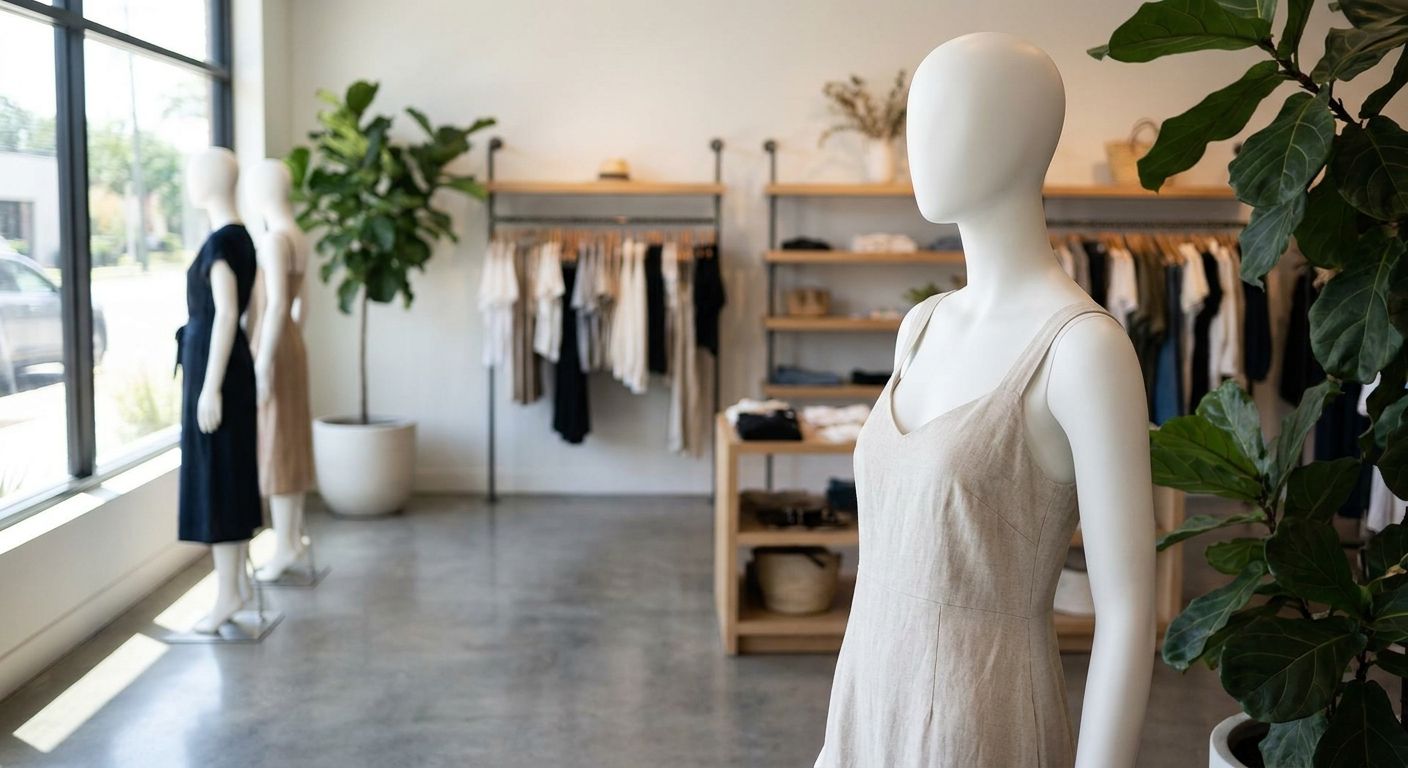
1. Full-body female mannequin for boutique displays: best fiberglass female mannequin for window displays
This is the standard full-height form — head, torso, arms and legs — built to carry a complete look from shoes to accessories. It's the form shoppers picture first when they hear fiberglass female mannequin, and it's the one that sells outfits, not just garments.
Full-body fiberglass mannequin pros:
- Displays a complete outfit including footwear and layering
- Glossy fiberglass finish photographs cleanly for social posts and catalog shots
- Holds shape and paint far longer than plastic under daily dressing
- Many designs offer removable arms for faster styling changes
Full-body fiberglass mannequin cons:
- Heavier than polypropylene, so repositioning takes two hands, not one
- Glossy surface shows dust and fingerprints faster than a matte finish
- Cracks rather than dents if dropped on a hard shop floor
Best for: boutiques running a full-look window display that changes weekly or less. Verdict: Buy.
2. Headless mannequins for clothing displays: best fiberglass mannequin for fast rack changes
A headless fiberglass form strips the face and often the lower legs, leaving a torso-and-limb structure that exists to show the garment, not tell a story. Stores that flip stock every few days lean on this shape because it saves real time.
Headless fiberglass mannequin pros:
- Dresses and undresses faster than a full-body form
- Keeps shopper attention on the fabric and cut, not a painted face
- Stacks or stores more compactly between resets
- No wig or makeup upkeep to worry about
Headless fiberglass mannequin cons:
- Reads as less warm or inviting for a flagship window
- Arms are often fixed, limiting pose changes
- Some upscale boutiques avoid the headless look entirely for street-facing windows
Best for: stores restocking multiple times a week that need speed over spectacle. Verdict: Buy.
3. Jewelry display mannequins: best fiberglass mannequin for accessories
A bust or neck-and-shoulder form built specifically to carry scarves, necklaces, and bags without a full body competing for attention. It's the smallest footprint on this list, and it's built for counters, not the floor.
Jewelry bust mannequin pros:
- Small enough to sit on a counter or shelf, not just the floor
- Puts full focus on the accessory instead of an outfit
- Lighter to move than a full-body fiberglass form despite the same material
- Works for scarves, chains, headwraps and small bags equally well
Jewelry bust mannequin cons:
- No use for displaying clothing at all
- Limited to upper-body and neck-area accessories only
Best for: accessory counters, jewelry corners, and scarf displays inside a bigger store. Verdict: Buy.
4. Fiberglass dress form: best for dressmakers and tailoring fits
A dress form isn't a display piece — it's a working tool. Fiberglass dress forms give tailors and dressmakers a stable, pinnable surface to drape fabric, check hemlines, and fit garments before a client ever tries them on.
Fiberglass dress form pros:
- Stable base that holds a pin without shifting mid-fitting
- Standard proportions match common pattern sizing
- Durable enough for daily studio use, unlike foam-only forms
Fiberglass dress form cons:
- Not designed for storefront traffic or window display
- Fixed sizing unless you specifically buy an adjustable model
Best for: dressmakers, tailors, and fashion design studios doing fittings, not retail. Verdict: Buy for production work, skip for the shop window.
5. Male fiberglass mannequin: best for menswear sections
Structured shoulders and a straighter torso line make the male fiberglass mannequin the right form for suits, shirts, and blazers. It's a specialist piece — it earns its space only when menswear is actually on the rack.
Male fiberglass mannequin pros:
- Holds structured tailoring — shoulders, lapels, blazer lines — accurately
- Matches customer expectations for how a suit should sit
- Same fiberglass durability as the female forms
Male fiberglass mannequin cons:
- No use in a womenswear-only boutique
- Same weight and handling trade-offs as any fiberglass form
Best for: stores that stock men's shirts, suits, or a mixed-gender rack. Verdict: Buy if menswear is part of the mix. Skip if it isn't.
How we ranked these
Each type was weighed against the same six criteria — finish durability, weight and portability, pose flexibility, sizing accuracy, crack resistance, and cleaning ease. The full-body fiberglass female mannequin tops the list because it's the only shape that satisfies every criterion for a general boutique window. The rest earn their spot by dominating one specific job: speed, accessories, fitting, or menswear.
Check current mannequin costs first
See what fiberglass mannequin types actually run in Nigeria in 2026 before you order.
Which fiberglass mannequin should you choose?
If your boutique runs one main window and changes it every few weeks, the full-body fiberglass female mannequin is the default buy — it's the only shape built to sell a complete look. If you restock daily, move to the headless fiberglass mannequin instead and save your staff the time. Everything else on this list — the jewelry bust, the dress form, the male mannequin — is a specialist purchase you add once you know exactly what job it's doing on your floor. No shaking: match the mannequin to the task, not the other way round.
FAQ
What is the best fiberglass female mannequin for a boutique window in 2026?
The full-body fiberglass female mannequin is the best choice for a boutique window in 2026 because it shows a complete outfit, from footwear to accessories, in one display. Choose a headless form instead if you restyle the window more than once a week.
Is fiberglass better than plastic for a display mannequin?
Fiberglass holds its paint finish and shape longer than polypropylene plastic under daily dressing, which matters most for stores that reuse the same mannequin for years. Plastic is lighter and cheaper to reposition, so it suits stores that move mannequins often.
What's the difference between a headless mannequin and a full-body mannequin?
A headless mannequin removes the face and sometimes the lower legs so shoppers focus purely on the garment, while a full-body mannequin shows the complete look including footwear. Stores with fast stock turnover generally favor headless forms because they dress and undress faster.
Can I use a fiberglass mannequin as a dress form for sewing?
A standard fiberglass display mannequin isn't built for pinning fabric, so it won't work well as a sewing tool. A dedicated fiberglass dress form has a pinnable surface designed specifically for draping and fitting.
Do jewelry mannequins come in fiberglass?
Yes, fiberglass jewelry busts are common and hold up better than resin or foam versions under daily handling of scarves, necklaces, and bags. They're built as a compact counter piece, not a full-body display.
How much do mannequins cost in Nigeria in 2026?
Cost depends on the mannequin type, finish, and whether it's a full-body, headless, bust, or dress form, so check current pricing before ordering rather than relying on old figures. A detailed cost breakdown by type is worth reviewing before you commit to a bulk order.
Are male fiberglass mannequins different from female ones?
Yes, male fiberglass mannequins have a straighter torso and structured shoulder line built to hold suits and blazers correctly, while female forms follow a different proportion set. Buy the male form only if menswear is part of your rack.
Do fiberglass mannequins crack easily?
Fiberglass mannequins resist daily wear and dressing far better than they resist a hard drop — a fall onto a tiled floor can crack the shell where plastic would just dent. Handle full-body forms with two people when moving them near doorways or stairs.
One last thing
The weight that makes a fiberglass mannequin annoying to reposition is the same weight that keeps it from toppling in a crowded aisle — a real trade-off worth remembering before you complain about carrying one across the shop floor in 2026. Heavier forms simply stand firmer where foot traffic is highest, which is exactly where a tipped-over mannequin does the most damage to stock and to your window display.