Choosing between fiberglass, headless, curve-specific and dress-form options gets confusing fast when your rack runs a genuine plus-size line. Best plus size mannequin overall for boutique window displays: fiberglass plus-size mannequins. Best for e-commerce and lookbook photography: headless plus-size mannequins. Best for curvy apparel boutiques: female curve mannequins. Best for extended-size menswear: male big-and-tall mannequins. Best for dressmakers grading curvy patterns: plus-size dress forms.
- Fiberglass plus-size mannequins win for boutique window displays in 2026 because they hold structured fabric without sagging.
- Headless plus-size mannequins are the pick for e-commerce photography — the garment stays the focus, not a face.
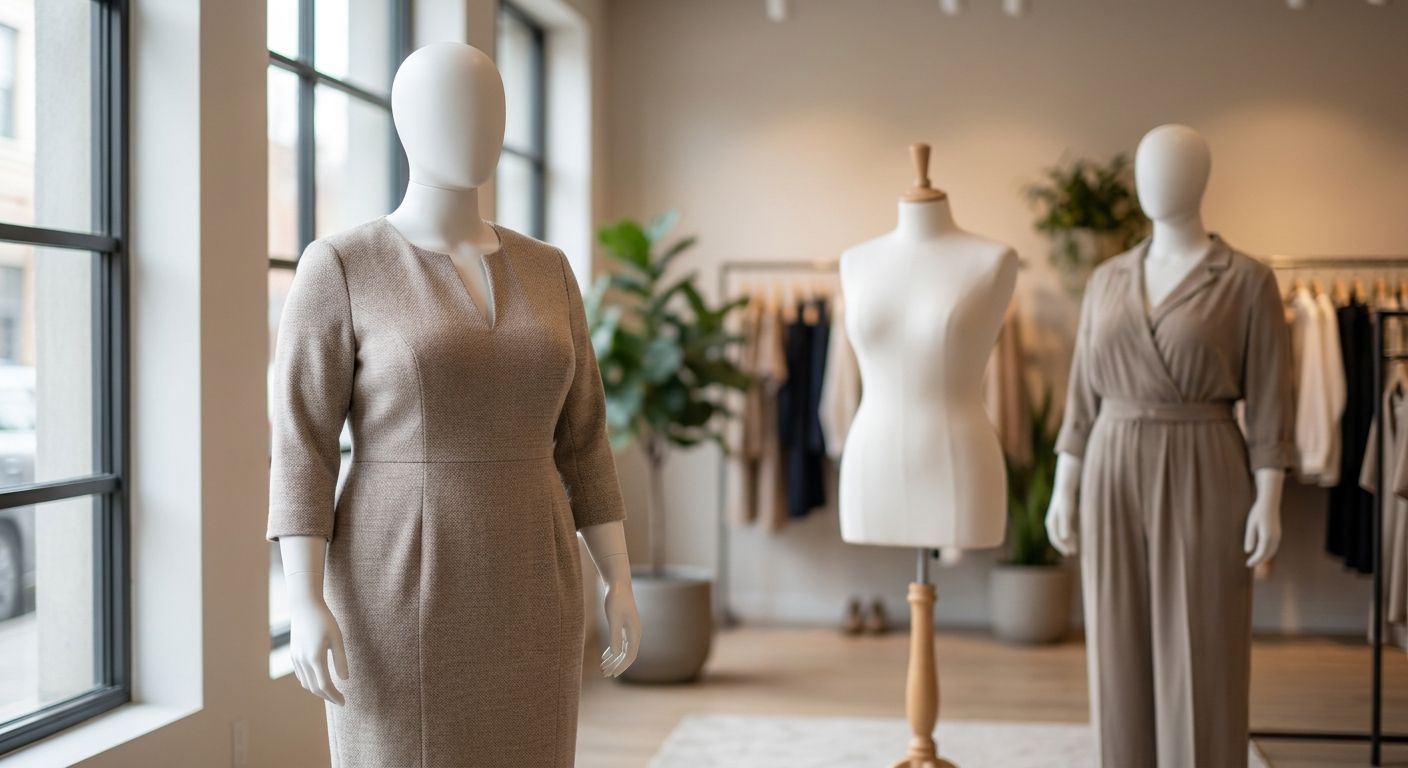
- Female curve mannequins fit curvy apparel boutiques better than standard female forms sized down or scaled up.
- Male big-and-tall mannequins solve the gap most menswear stores ignore: extended-size suiting and outerwear.
- Plus-size dress forms belong on a tailor's floor, not a shop window — they're built for grading, not display.
Why this matters
Most mannequin catalogs in Nigeria still default to a straight-size block, then call the wider version "plus size" without changing the actual body proportions. That's a mismatch — a genuine plus-size form has different bust, hip and thigh geometry, not just a scaled-up straight-size shell. If your rack carries sizes 16 and up, the mannequin needs to carry them too, or the garment drapes wrong on the floor.
Retailers stocking inclusive sizing in 2026 lose sales when the display form fights the garment instead of selling it. Whogohb stocks plus-size mannequin types across fiberglass, headless, female curve, male big-and-tall and dress-form builds — the right pick depends on whether you're dressing a window, shooting a product photo, or fitting a pattern.
What makes the best plus size mannequin
- True curve proportions — bust, hip and thigh measurements built for size 16+ garments, not a stretched straight-size mold
- Finish durability — a shell that survives repeated dressing, pinning and repositioning without cracking
- Pose and stance options — enough variety to match your merchandising, from static retail poses to more dynamic window stances
- Use-case fit — a form matched to its job: floor display, photography, or pattern fitting are not the same job
- Repairability — fiberglass and foam both take knocks on a shop floor; how easily a chip or scuff gets fixed matters over a multi-year lifespan
At a glance: plus size mannequin types compared (2026)
| Mannequin type | Best for | Standout feature | Key limitation |
|---|---|---|---|
| Fiberglass plus-size mannequin | Boutique window displays | Rigid finish holds structured, heavy fabric without sagging | Heavier to reposition than foam or hollow forms |
| Headless plus-size mannequin | E-commerce and lookbook photography | Keeps the camera on the garment silhouette, not a face | Can't display headwear or hair accessories |
| Female curve mannequin | Curvy apparel and inclusive-size boutiques | Proportions built around fuller bust, hip and thigh lines | Fewer pose variants than standard female forms |
| Male big-and-tall mannequin | Extended-size menswear stores | Broader shoulder and chest block matches big-and-tall tailoring | Fewer stock finishes available than female curve lines |
| Plus-size dress form | Dressmakers and tailors grading curvy patterns | Adjustable, pinnable surface built for fitting, not floor display | Not designed for public-facing merchandising |
1. Fiberglass plus-size mannequins: best for boutique window displays
Fiberglass forms hold a fixed pose and a rigid shell, which matters when a heavy coat, a structured blazer or a fitted gown needs to hang exactly right for weeks at a time in a shop window. The material takes a painted or fabric-wrapped finish well and survives repeated dressing without warping. For a boutique that changes window displays seasonally rather than daily, fiberglass is the workhorse.
Fiberglass plus-size mannequin pros:
- Holds structured, heavier garments without sagging at the shoulder or hip
- Durable shell survives years of repositioning on a busy shop floor
- Paintable and finish-flexible for matching store branding
Fiberglass plus-size mannequin cons:
- Heavier than foam or hollow-body alternatives, harder for one person to move
- A crack in the shell is harder to disguise than a scuff on foam
Best for: boutiques and fashion houses running long-term window and floor displays. Verdict: Buy — this is the default plus-size mannequin for retail floor use in 2026.
2. Headless plus-size mannequins: best for e-commerce photography
Drop the head and the shot becomes about the garment, not the face — which is exactly what a product listing or lookbook needs. Headless forms also sidestep the styling debate over facial features and hairstyling that full-body mannequins sometimes force on a brand. For any store shooting its own catalog images, this is the more practical pick.
Headless plus-size mannequin pros:
- Keeps buyer attention on fit and drape, not a mannequin's face
- Simpler to store and transport between photo sessions
- Works across multiple outfit changes in one shoot without a styling reset
Headless plus-size mannequin cons:
- Can't showcase hats, headwear or hair-adjacent accessories
- Looks incomplete on a public-facing sales floor without a head option nearby
Best for: brands shooting their own product photography or running an online store alongside a physical one. Verdict: Buy — pair it with a fiberglass form for the floor and this covers the photography side.
3. Female curve mannequins: best for curvy apparel boutiques
A curve mannequin isn't a straight-size female form stretched wider — the bust, waist and hip ratio is built differently from the start. That distinction is the entire point for a boutique whose core stock is sizes 16 to 24. Garments drape the way they will on an actual customer, which is the fastest way to sell the fit rather than just the fabric.
Female curve mannequin pros:
- Proportions match how plus-size garments actually sit on a body
- Improves customer confidence when the display body resembles theirs
- Available in enough finishes to match most boutique aesthetics
Female curve mannequin cons:
- Pose variety is narrower than standard female mannequin ranges
- Sourcing matched sets (multiple identical forms) can take longer
Best for: boutiques and fashion houses whose core range is inclusive or curve-specific sizing. Verdict: Buy — this is the closest match to the actual customer for a curve-focused rack.
4. Male big-and-tall mannequins: best for extended-size menswear
Most menswear displays still assume a standard block, which leaves big-and-tall stock looking baggy or mis-proportioned on the floor. A mannequin built for a broader shoulder and chest line fixes that instantly — the suit or jacket sits the way it's cut to sit. It's a smaller product category than female curve forms, so the finish and stance choices are narrower.
Male big-and-tall mannequin pros:
- Shoulder and chest block matches extended-size suiting and outerwear
- Fixes the mis-drape problem that standard male forms create on bigger garments
- Durable enough for daily floor use
Male big-and-tall mannequin cons:
- Fewer finish and skin-tone options than female curve lines
- Limited pose range compared to standard menswear forms
Best for: menswear stores and fashion houses carrying extended or big-and-tall suiting. Verdict: Buy — the only real fix for a store that's stopped pretending big-and-tall is a niche.
5. Plus-size dress forms: best for dressmakers grading curvy patterns
A dress form isn't for the shop window — it's a fitting tool. Plus-size dress forms give a dressmaker or tailor a pinnable, adjustable surface built to the bust-waist-hip ratio of a genuinely bigger body, which matters when grading a pattern up rather than guessing at the math. If your business is bespoke or made-to-measure rather than off-the-rack, this is the tool, not the fiberglass forms above.
Plus-size dress form pros:
- Adjustable surface supports pinning and fitting directly on the form
- Built to curvy proportions rather than a straight-size block scaled up
- Essential for grading patterns accurately across plus sizes
Plus-size dress form cons:
- Not designed for public display — no head, limited finish options
- A poor substitute for a floor mannequin if that's what you actually need
Best for: dressmakers, tailors and fashion houses doing made-to-measure or pattern grading work. Verdict: Buy — but only if fitting, not display, is the job.
How we ranked
Each type above was scored against the five criteria listed earlier — curve proportions, finish durability, pose flexibility, use-case fit and repairability — and matched to the single use case it serves best rather than forced into a single leaderboard. That's why fiberglass and headless forms both rank first for their own job instead of competing against each other.
“A plus-size mannequin isn't a scaled-up straight-size form — it's a different pattern block entirely.”
Which plus size mannequin should you choose?
If you're stocking one form for a boutique floor in 2026, start with a fiberglass plus-size mannequin — it's the most versatile for display and the most durable for daily handling. Add a headless form the moment you start shooting your own product photos, and bring in a plus-size dress form only once fitting and grading, not display, becomes part of the workflow. Male big-and-tall forms are a separate purchase entirely — don't try to make a female curve form cover menswear.
Browse Whogohb's mannequin range
Compare fiberglass, headless and curve mannequin options for your fashion house.
FAQ
What is a plus size mannequin?
A plus size mannequin is a display or fitting form built to curvy body proportions — fuller bust, hip and thigh measurements — rather than a straight-size shape scaled up. It's used to display size 16-and-up garments the way they'll actually sit on a customer.
What sizes do plus size mannequins typically represent?
Plus size mannequins are generally built around size 16 to 24 proportions, covering the range most inclusive-size boutiques and fashion houses stock. The exact fit varies by manufacturer and mannequin line.
Is a headless mannequin better than a full-body plus size mannequin?
It depends on the job — headless mannequins work better for e-commerce photography because they keep focus on the garment, while full-body fiberglass mannequins work better for shop-floor display. Most stores use both.
Do plus size dress forms come with adjustable dials?
Many plus size dress forms include an adjustable, pinnable surface built for fitting and pattern grading, though the exact adjustment mechanism varies by model. Check the specific product listing before buying.
What's the difference between a female curve mannequin and a standard plus size mannequin?
A female curve mannequin is a specific plus-size subtype built around fuller bust, waist and hip ratios for curvy apparel lines, while "plus size mannequin" is the broader category that also includes male big-and-tall and dress-form types.
How much do plus size mannequins cost in Nigeria in 2026?
Cost varies by material, finish and mannequin type, with fiberglass forms generally priced higher than foam or hollow-body alternatives. Check current listings directly for up-to-date figures.
Can fiberglass plus size mannequins be repainted?
Yes, fiberglass shells generally accept a repaint or refinish, which is one reason they hold up over a multi-year retail lifespan better than some foam alternatives. Surface prep matters for how long the new finish lasts.
What's the best plus size mannequin for a big-and-tall menswear display?
A male big-and-tall mannequin, built with a broader shoulder and chest block, is the correct choice for extended-size suiting and outerwear — a standard male form will make big-and-tall garments look mis-fitted.
One last thing
The mistake most fashion houses make isn't picking the wrong mannequin — it's picking one mannequin type to do every job. A fiberglass plus-size mannequin on the floor, a headless form for photography and a dress form on the cutting table aren't competing purchases; they're three different tools solving three different problems in the same business. Buy for the job, not for the catalog page.